
Signs You Need Dryer Vent Cleaning in New Haven, CT
The clearest signs you need dryer vent cleaning are loads taking longer than 45 minutes, a burning smell during cycles, an exterior vent cap that barely opens, and lint collecting behind the dryer where it shouldn’t escape. In New Haven’s older multifamily housing, there’s a hidden layer: vent runs routed through shared walls in converted Victorians and triple-deckers can be packed with compacted lint for years before any surface symptom appears, creating fire and carbon monoxide risks you’ll never see coming. If you’re noticing any of these warning signals, call Northstar Air Duct Cleaning Service Greater New Haven at (844) 981-4535 — we’ll scope the full run and tell you what’s actually happening inside.
What We Found in a Wooster Square Victorian That Changed How We Talk About Dryer Vents
Most articles about dryer vent warning signs start with longer dry times. That’s real, but it’s incomplete — especially here.
A few months back, we got a call from a tenant in a subdivided Queen Anne Victorian just off Chapel Street in Wooster Square. The dryer was working “fine,” they said. Cycles ran about 50 minutes, which they’d accepted as normal for an older building. What caught their attention was a faint, persistent mustiness in the laundry closet that wouldn’t go away.
Here’s what we found: the vent had been routed through a shared plaster wall, across the width of the original house, to an exit point on the opposite exterior wall. Total run length: roughly 32 feet. The transition elbow where the duct bent around a 1920s timber joist had been compressed to maybe 60% of its original diameter by decades of settling and amateur repairs. The lint inside wasn’t loose and fluffy — it was dense, almost felted, bonded together by years of coastal humidity from New Haven Harbor. That humidity is the difference-maker: in dry climates, lint stays loose and moves through airflow. In New Haven’s persistent coastal moisture, it compacts and hardens, shortening the safe interval between cleanings dramatically.
The previous tenant had been there three years. The one before that, two. Nobody had ever checked the vent. We pulled out roughly seven pounds of compacted material. The tenant had been running a gas dryer with a partially blocked vent in a poorly ventilated closet, with combustion gases having only one compromised escape route. No burning smell. No hot wall. Just a “fine” dryer and a musty closet.
That’s why we lead with this story. The standard warning signs matter, but in New Haven’s housing stock — pre-1940 wood-frame multifamily buildings, triple-deckers in East Rock, converted rentals near Yale in Dwight and Edgewood — the vent routing itself creates risks that exist before any visible symptom shows up. Residents in these buildings often don’t know how the vent was routed, how long the run is, or when it was last cleaned. Sometimes there is no “last cleaned.”
The Standard Warning Signs — And What They Actually Mean
These are the symptoms every homeowner should watch for. They’re reliable indicators that airflow is restricted and lint accumulation has reached a point where cleaning is necessary:
- Dry cycles consistently exceeding 45 minutes. A standard load should dry in 30–40 minutes. When you’re pushing 50, 60, or longer, the moist air isn’t exhausting efficiently. The lint layer inside the duct has become thick enough to choke airflow.
- The exterior vent cap barely lifts or doesn’t open during operation. You should see the flap pushed open by strong exhaust airflow. Weak movement means back pressure from blockage.
- Laundry room temperature rises noticeably during a cycle. Heat that should be leaving through the vent is instead radiating into the room. In summer, this is obvious; in winter, you might mistake it for normal heating system operation.
- Burning odor or musty smell during drying. Lint is highly flammable. A burning smell means it’s overheating somewhere in the system. Mustiness suggests moisture trapped behind the blockage — a precursor to mold in humid coastal conditions.
- Excessive lint on clothing after drying. When airflow is compromised, the dryer’s lint screen can’t capture everything. Lint circulates back onto the load.
- Visible lint accumulating behind the dryer or around the connection. This means the exhaust seal is compromised, often because back pressure from downstream blockage is forcing air and lint out at joints.
These signs are real and should prompt immediate attention. But in our experience across greater New Haven, by the time these appear in older multifamily conversions, the underlying problem has often been developing for multiple tenancy cycles.
The Structural Warning Signs Specific to New Haven’s Older Housing
This is where we diverge from generic advice. New Haven’s housing stock — heavily weighted toward pre-1940 construction, with concentrations of two-family colonials, triple-deckers, and subdivided Victorians in neighborhoods like Wooster Square, East Rock, Dwight, and Edgewood — presents conditions that standard dryer vent guidance doesn’t address.
These buildings were originally built for gravity hot-air or steam heat. When forced-air systems and laundry facilities were retrofitted, ductwork and vent runs were improvised around existing plaster walls and timber framing. The results create specific risk profiles:
- Vent runs exceeding 25 feet without documentation of derating or booster fan installation. NFPA 211 establishes 25 feet as the effective limit for standard dryer vent runs before airflow derating is required. In converted multifamily buildings, we’ve measured runs of 30–40 feet routed through wall cavities with no record of engineering accommodation. The dryer works, barely, but lint accumulates at an accelerated rate in the extended low-velocity zones.
- Visible crimping, compression, or duct tape repairs at wall transitions. In the rental blocks near Yale, we routinely encounter transitions where the duct has been squeezed around original framing, compressed by settling, or patched with successive layers of tape over multiple tenancy cycles. Each constriction becomes a lint trap.
- No record of cleaning in a unit with multiple previous tenants. This is perhaps the most reliable predictor of hidden blockage. If you’re the third, fourth, or fifth tenant and there’s no documentation of vent cleaning, assume the run is compromised. Student rentals and high-turnover units are especially prone to this deferred maintenance.
- Gas dryer in a poorly ventilated closet or interior room. This is the carbon monoxide scenario. A blocked vent in a confined space doesn’t just create fire risk — it backs combustion gases into living areas. Carbon monoxide has no odor, no color, and no visible warning. The first symptom can be the last.
Coastal humidity compounds all of this. New Haven sits at the northern end of Long Island Sound, and even winter months carry elevated moisture levels. That humidity binds lint particles together, creating the dense, compacted deposits we find in long runs through shared walls. A vent system that might function adequately for five years in a drier inland climate can require cleaning every 18–24 months here.
Why the Long Run in a Shared Wall Isn’t a DIY Job
We’ve seen homeowners attempt to clear these extended runs with consumer-grade rotary brushes or shop vacuums. Here’s what happens: the brush pushes through the first few feet, maybe reaches the first elbow, and compacts the lint deeper into the run. The blockage shifts but doesn’t clear. The user feels resistance, assumes they’ve done what they can, and reassembles the system — now with a more concentrated obstruction further downstream.
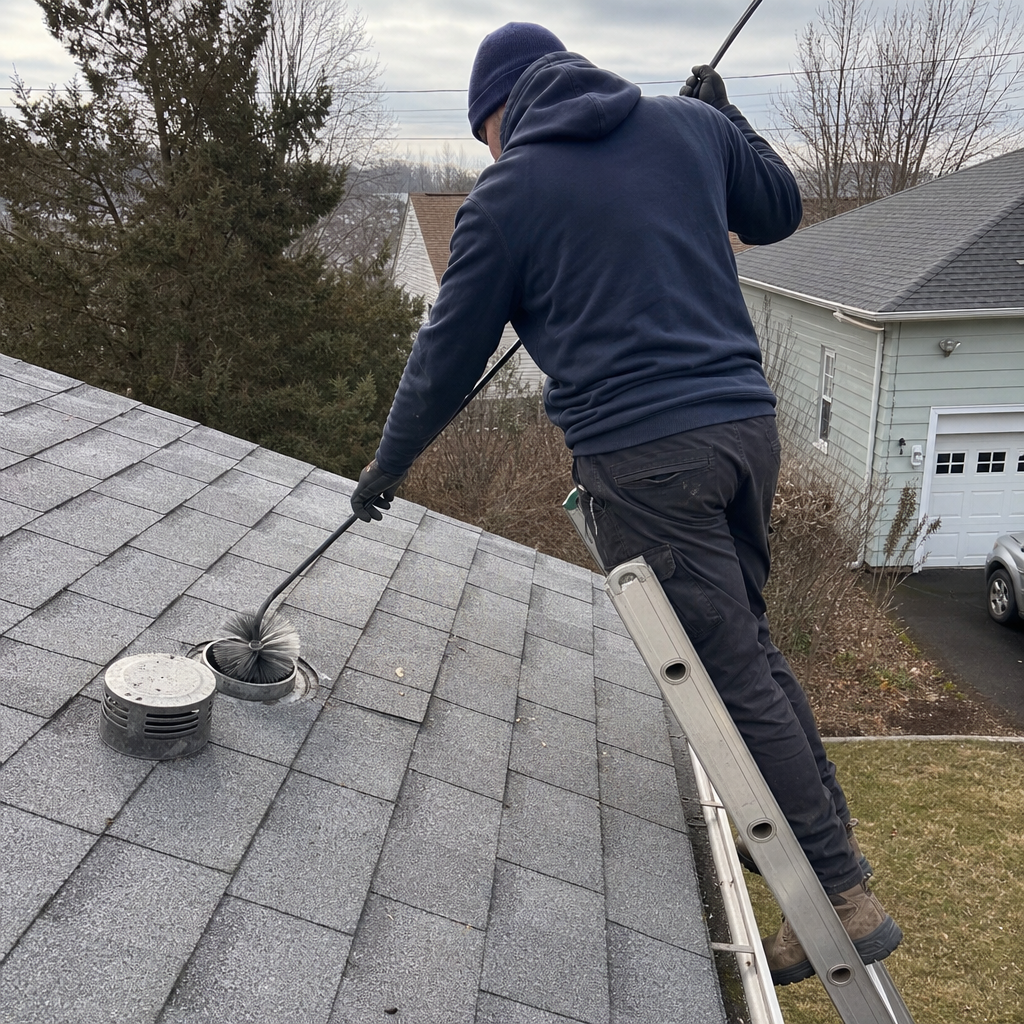
Our Nikro equipment with extended-reach capability is built for this. We’re running professional-grade systems that can navigate 20, 30, 40-foot runs with controlled torque and extraction power, pulling compacted material out rather than pushing it in. For the Wooster Square job, we needed every foot of that reach plus camera verification to confirm the full run was clear. That’s not equipment you rent for an afternoon.
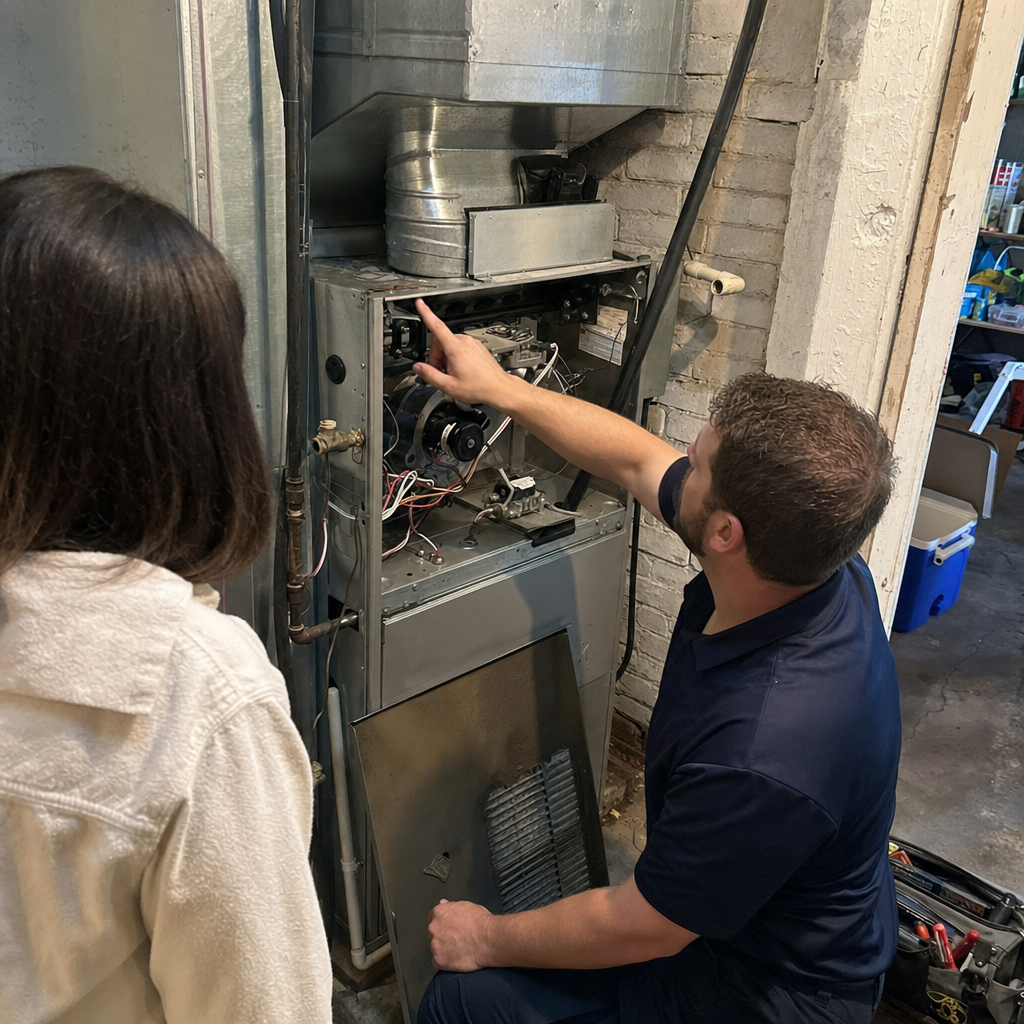
We also scope before we commit. Brian Rivera, our owner and lead technician, grew up in Westville and learned his HVAC fundamentals at Gateway Community College before spending years in the field understanding how these older New Haven systems actually behave. His approach — and ours — is to diagnose first. We’ll run a camera, measure airflow, map the run if the routing is unclear, and tell you what your system needs. Not what adds to the invoice.
What Professional Dryer Vent Cleaning Costs in New Haven
Pricing depends on run length, accessibility, and whether we find conditions requiring repair or rerouting. For a standard single-family installation with accessible exterior termination, most cleanings fall in a predictable range. Multifamily conversions with extended runs through shared walls require more time and specialized equipment.
| Service Level | Typical Range | What’s Included |
|---|---|---|
| Standard residential dryer vent cleaning (single-family, accessible run under 15 ft) | $150 – $220 | Full brush and vacuum extraction, airflow test, exterior cap inspection |
| Extended-run cleaning (multifamily, 15–35 ft through walls, with camera verification) | $220 – $340 | Camera scoping, Nikro extended-reach cleaning, multi-point airflow verification, written condition report |
| Rerouting or repair of damaged sections (crimped duct, failed transitions) | $180 – $450+ | Material and labor for code-compliant rigid metal replacement, proper sealing, airflow balancing |
We don’t quote over the phone for complex multifamily situations — we need to see the routing. Estimates are free, and if we scope the system and find it’s clear, we’ll tell you that too.
How Often Should Dryer Vents Be Cleaned in New Haven?
Standard guidance says annually for heavy use, every 18–24 months for moderate use. In New Haven, we’d push that toward the shorter interval for several reasons:
- Coastal humidity compacts lint faster than in drier climates
- Older, extended vent runs in multifamily conversions accumulate material in low-velocity zones
- Gas dryers in poorly ventilated spaces carry carbon monoxide risk that justifies conservative maintenance schedules
- High-turnover rental units often lack any maintenance history, making baseline cleaning essential
For single-family homes with short, straight runs and electric dryers, the standard intervals work. For anyone in a pre-1940 multifamily building in Wooster Square, East Rock, Dwight, or similar neighborhoods, we’d recommend annual inspection and cleaning as warranted.
When to Call a Professional vs. What You Can Check Yourself
There are safe, useful checks homeowners can perform:
- Verify the exterior vent cap opens fully during operation
- Clean the lint screen before every load (this is basic but surprisingly neglected)
- Check behind the dryer for lint accumulation at the connection point
- Note dry times and whether they’re creeping upward
What we don’t recommend: attempting to clear extended runs through walls, disassembling gas connections, or working on roofs or upper-story exterior caps without proper equipment. The carbon monoxide and fire risks in gas dryers are genuine and immediate. If you smell burning, stop using the dryer and call a professional. If you have any gas dryer in a confined space with an extended or unknown vent run, professional inspection is the prudent path.
Our Dryer Vent Cleaning service covers the full diagnostic and cleaning process, from camera scoping to airflow verification. For properties with Aprilaire, Honeywell, or Abatement Technologies IAQ systems installed, we coordinate our work to maintain integrated air quality performance — we don’t treat the dryer vent as an isolated component when it’s part of a whole-building breathing system.
FAQs
Standard residential dryer vent cleaning in New Haven typically runs $150–$220 for accessible runs under 15 feet, while extended multifamily runs through shared walls range from $220–$340 depending on length and access complexity. We provide free estimates before any work begins — call (844) 981-4535 to schedule a no-pressure assessment.
For short, straight, accessible runs with no gas connection, DIY cleaning with a basic rotary kit can work but rarely achieves complete lint removal. For New Haven’s older multifamily buildings with extended runs through walls, professional cleaning with equipment like our Nikro extended-reach system is necessary to clear rather than compact blockages — and to verify completion with camera inspection. The cost of incomplete DIY cleaning is often a service call to fix what was pushed deeper, plus the fire or CO risk of a still-blocked vent.
We prioritize burning-smell calls for same-day response when possible — this indicates active overheating and genuine fire risk. Stop using the dryer immediately, unplug it if safely accessible, and call (844) 981-4535. We’ll assess whether the issue is lint blockage, a failing component, or both, and we’ll tell you honestly if repair or replacement is the better path.
Measure or estimate the total path from dryer connection to exterior cap — if it exceeds 25 feet or makes multiple bends, it likely needs evaluation against NFPA 211 derating requirements. In New Haven’s converted multifamily housing, many runs were improvised without engineering review and exceed safe parameters. We measure, map, and test airflow on every job; if your run is overextended, we’ll document it and discuss rerouting options.
What Northstar Brings to Dryer Vent Work in New Haven
We’re not a franchise crew rotating through territories. Brian Rivera shows up as lead technician on every job, bringing eight years of hands-on experience with the specific conditions of New Haven’s older housing stock. We run Rotobrush and Nikro professional-grade equipment — purpose-built systems, not consumer vacuums or contractor workarounds. Our 4.9-star average across 275 verified reviews reflects consistent, repeatable quality from the same accountable technician, not a handful of early favorable ratings.
Our service scope extends from cleaning to sealing and sanitizing — we treat root causes, not surface symptoms. When we find compromised ductwork in a multifamily conversion, we can repair and seal it under the same provider, rather than handing you off to another contractor. And if your system doesn’t need cleaning yet, we’ll tell you that directly. 275 homeowners agree: the assessment matters as much as the service.
If you’re seeing warning signs — or simply don’t know the history of your vent run in a New Haven rental or converted multifamily building — have it looked at. Northstar Air Duct Cleaning Service Greater New Haven offers no-pressure assessments throughout New Haven. Call (844) 981-4535 for a free estimate.
Written by Brian Rivera, Owner & Lead Technician at Northstar Air Duct Cleaning Service Greater New Haven, serving New Haven, CT.