
How Often Should You Clean Air Ducts in New Haven? Every 2–4 Years for Most Older Homes, Sooner If You See These Signs
Most homeowners in New Haven should clean their air ducts every 2 to 4 years rather than the standard 3-to-5-year interval you’ll see quoted nationwide. That national guideline was developed for modern construction with sealed, insulated duct systems in climate-controlled spaces — conditions that barely exist in the pre-1940 wood-frame housing that dominates our city. If you live in a converted triple-decker near the harbor, a Victorian divided into rentals in East Rock, or any home with retrofitted ductwork bending around original plaster walls, you’re working with a system that accumulates debris faster and traps moisture longer than the engineers who wrote those guidelines ever imagined. Call (844) 981-4535 if you want a straight assessment of what your specific system actually needs.
Why the Standard 3–5 Year Rule Falls Short in New Haven
The 3–5 year cleaning interval that gets repeated on every generic home-maintenance site assumes three things: insulated ductwork, stable humidity, and duct geometry that was designed for the house rather than improvised around it. In New Haven, we rarely see all three on the same job.
Our housing stock skews heavily pre-1940 — two-family colonials, triple-deckers, and Queen Anne Victorians in neighborhoods like Wooster Square and Dwight that were built for gravity hot-air or steam heat. When forced-air systems came along decades later, installers routed sheet-metal ductwork through wall cavities and crawl spaces never intended for it. The result is irregular geometry with dead-leg runs where debris settles, uninsulated sections in unconditioned basements, and crimped connections that slow airflow and let particulate accumulate.
Brian Rivera, Owner & Lead Technician at Northstar Air Duct Cleaning Service Greater New Haven, scopes these systems before cleaning them — and what he finds in return air vents would make the national guideline writers reconsider their assumptions. We’ve pulled out decades of compacted dust, biological growth fed by harbor humidity, and in rental properties near Yale, original 1920s galvanized ductwork that hasn’t been touched since the furnace was swapped out three owners ago.
Here’s what shortens the interval in our market:
- Persistent coastal humidity: New Haven sits at the northern end of Long Island Sound. Even in winter, elevated moisture levels in uninsulated basement runs create condensation on sheet-metal ductwork — conditions that accelerate mold colonization and compact dust into clinging layers rather than loose particulate.
- Irregular duct geometry: Retrofitted systems with dead legs and sharp bends trap debris where standard straight-run designs wouldn’t. A 90-degree crimp around a timber frame post becomes a collection point that needs attention every couple of years, not every half-decade.
- High-occupancy rental cycling: In Dwight and Edgewood, tenant turnover means cleaning history is often unknown. When Brian shows up to assess a new property, the practical starting point is clean it, document it, then set the interval from that baseline.
- Renovation residue: Older homes with disturbed plaster or lead paint during informal renovations send that material into duct runs. We’ve found lead paint dust in systems where the “renovation” was just a landlord swapping fixtures between tenancies.
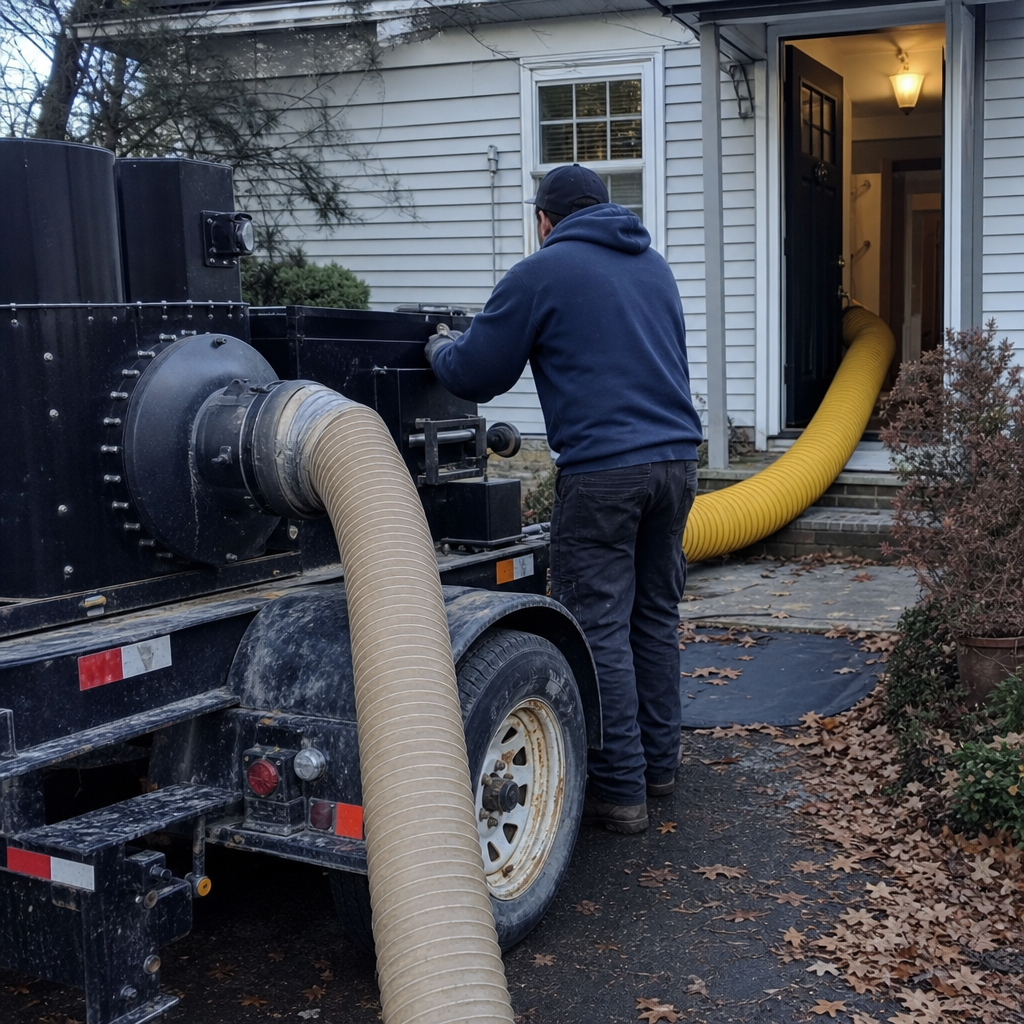
Our Air Duct Cleaning in New Haven service adapts to these conditions with professional-grade Rotobrush and Nikro equipment — tools built for the irregular access points and variable duct sizes we encounter in retrofitted systems, not the standardized layouts of suburban new construction.
What Actually Determines Your Cleaning Interval
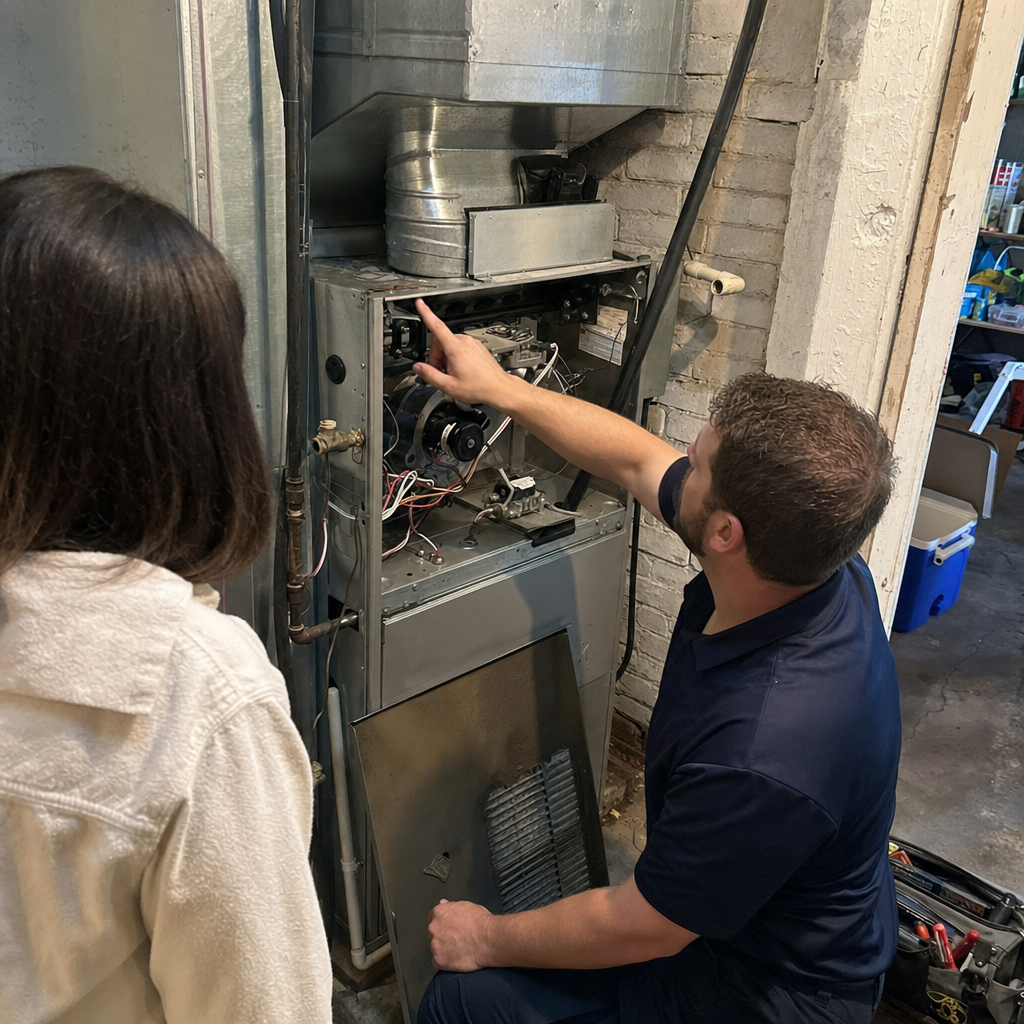
The best indicator isn’t a calendar — it’s what we see when we scope your system and what your filters tell us between visits. Brian’s approach is straightforward: he’ll tell you what your system needs, not what adds to the invoice. That means checking the return air vent for visible accumulation, measuring filter loading rate, and noting whether your ducts are showing the condensation patterns that predict biological growth.
Household factors that reliably push you toward the shorter end of that 2–4 year range:
- Pets that shed heavily — dander accumulates in ductwork and recirculates
- Smokers in the household — tar and particulate coat duct interiors
- Allergy or asthma sufferers — including Brian’s own experience; his youngest daughter’s asthma was part of what drove him into this trade
- Recent renovations, especially in pre-1940 homes where plaster dust or lead paint disturbance enters the system
- Unknown cleaning history, common in newly purchased rentals or inherited properties
Conversely, a well-maintained system in newer construction with sealed ducts, regular filter changes, and stable occupancy might stretch toward 4 years — though in New Haven, “newer construction” is a relative term.
What Happens When You Wait Too Long in This Climate
New Haven Harbor’s coastal humidity doesn’t take winters off. Uninsulated sheet-metal runs in basement retrofits develop condensation year-round, and that moisture turns accumulated dust into a substrate for mold and bacteria. By the time you’re smelling something from the vents or seeing dust puff out on startup, the biological activity has been established for months.
We’ve cleaned systems in Wooster Square Victorians where the ductwork was original to a 1980s forced-air retrofit — galvanized sheet metal crimped and duct-taped over multiple tenancy cycles, packed with debris that predates the current owner’s mortgage. The humidity had done its work; what should have been loose particulate had compacted into layers that required agitation with our Nikro equipment before the Rotobrush vacuum could extract it effectively.
This isn’t just an air quality issue. Compacted debris restricts airflow, forcing your blower motor to work harder and shortening its lifespan. In rental properties where margins are tight, that energy penalty compounds month after month — and the emergency replacement costs far more than scheduled maintenance would have.
How to Know It’s Time: The Visual Check Brian Recommends
Before you call anyone, including us, do this: remove a return air vent cover and shine a flashlight into the duct. What you’re looking for isn’t a light dusting — that’s normal. What matters is visible accumulation thick enough to disturb with a finger, dark staining that suggests moisture damage or biological growth, or any musty odor when the system kicks on.
Check your filter monthly. If you’re replacing 1-inch pleated filters more than twice a year because they’re loaded and gray rather than just dusty, your ducts are feeding debris faster than they should. That’s a signal the interval is shortening.
When Brian shows up for an assessment, he runs a borescope camera through the system — the same equipment we use for cleaning — so you see what he sees. No guesswork, no upsell from a checklist. If your ducts don’t need cleaning yet, he’ll say so. That’s the accountability that comes from the owner being the lead technician on every job.
What Professional Duct Cleaning Costs in New Haven
Pricing depends on system size, accessibility, and condition — variables that swing wider in our older housing stock than in standardized new construction. Here’s what we typically see in the New Haven market:
| Service | Typical Range | What Affects Price |
|---|---|---|
| Standard residential duct cleaning | $350 – $650 | Number of vents, system accessibility, presence of uninsulated basement runs requiring additional agitation |
| Deep cleaning with heavy accumulation | $550 – $900 | Systems with 10+ years of neglect, compacted debris, or biological growth requiring sanitizing treatment |
| Duct repair & sealing | $200 – $500 per section | Crimped or separated retrofitted ductwork, common in pre-1940 conversions |
| Air quality sanitizing | $150 – $300 add-on | Applied after cleaning when moisture damage or mold colonization is present |
We don’t quote over the phone for jobs in older housing — the variables are too specific. What we do offer is a free, no-pressure assessment where Brian scopes the system and gives you a firm price before any work begins. Call (844) 981-4535 to schedule.
From Cleaning to Sealing: Why the Full Scope Matters
Cleaning ducts that are leaking or poorly sealed is half a solution. In retrofitted New Haven systems, we regularly find separated joints, failed duct tape, and gaps where improvisation met timber framing. Our Air Duct Cleaning service includes inspection for these issues — and when we find them, we can seal with proper materials compatible with Aprilaire, Honeywell, and Abatement Technologies systems already in your home.
This matters because leaky return ducts in unconditioned basements pull in the same humid, debris-laden air you’re trying to filter out. Clean ducts with leaky connections are back to square one in a season. Brian’s trained on Guardsman IAQ systems as well, so when we recommend sealing or upgrading filtration, it’s with specific knowledge of what’s compatible with your existing equipment — not a generic upsell.
275 homeowners across greater New Haven have rated this approach at 4.9 stars. The consistency comes from the same person assessing, quoting, and doing the work every time.
FAQs
Every 2 to 4 years for most pre-1940 homes with retrofitted ductwork, compared to the 3–5 year standard for modern construction. New Haven’s coastal humidity and irregular duct geometry in converted triple-deckers and Victorians accelerate accumulation and biological growth, shortening the practical interval. Call (844) 981-4535 and Brian will scope your system to give you a specific recommendation based on what he finds.
More frequent light cleanings cost less per visit and prevent the compacted accumulation that requires deep agitation and extended labor. A standard cleaning at 2–3 years might run $350–$500; waiting until debris is packed and moisture-damaged can push the same system into the $550–$900 range for deep cleaning plus sanitizing. Call (844) 981-4535 for a free assessment — we’ll tell you where your system falls on that spectrum.
Yes — especially in our humid climate where uninsulated duct runs support mold and dust mite populations that recirculate with every heating or cooling cycle. For households with allergy or asthma sufferers, including families like Brian’s where indoor air quality became personal, duct cleaning every 2 years with high-grade filtration can measurably reduce symptom triggers. Call (844) 981-4535 to discuss whether your system is contributing to what you’re experiencing.
In most cases, you don’t — and in Yale-adjacent neighborhoods like Dwight and Edgewood, high tenant turnover means cleaning history is frequently unknown. Brian’s recommendation for new property owners and managers: clean first, document the condition with scope footage, then set your interval from that baseline. You’ll know whether you’re maintaining a system that was cleaned last year or last century. Call (844) 981-4535 to schedule that baseline assessment.
When You’re Ready for a Straight Answer About Your System
If you’d rather have it looked at than guess, Northstar Air Duct Cleaning Service Greater New Haven offers a no-pressure assessment in New Haven — Brian shows up, scopes your ducts, and tells you what he sees. No calendar-based upsells, no franchise crew working from a script. Just the owner with 8 years of hands-on experience and professional-grade Rotobrush and Nikro equipment, giving you the same assessment he’d want for his own home. Call (844) 981-4535 for a free estimate.
Written by Brian Rivera, Owner & Lead Technician at Northstar Air Duct Cleaning Service Greater New Haven, serving New Haven, CT.