
Nikro Air Duct Cleaning in New Haven: A Homeowner’s Guide
Nikro air duct cleaning equipment uses industrial negative-pressure vacuum systems—typically 2,000–5,000 CFM—to extract debris from your entire duct network while containing it under HEPA filtration, rather than pushing contaminants back into your New Haven home. A contractor can own a Nikro machine and still do a poor job if they don’t understand access point strategy, dwell time, and containment protocols. If you’d rather not vet every technical detail yourself, Northstar Air Duct Cleaning Service Greater New Haven home offers free estimates—call (844) 981-4535 and Brian Rivera will walk you through what the job actually involves.
We’ve been in plenty of New Haven homes where a previous “duct cleaning” left the registers dustier than when the crew arrived. Usually, the homeowner hired based on a low price and a brand name dropped casually over the phone. The equipment matters, but only if the person running it understands why Nikro builds their machines the way they do.
What Nikro Equipment Is Actually Built to Do
Nikro manufactures negative-air machines and contact vacuum systems specifically for HVAC restoration and duct cleaning—not general contractor cleanup, not carpet extraction. Their portable vacuum units pull 2,000 to 5,000 cubic feet per minute (CFM) depending on the model, which is the airflow volume needed to overcome resistance in a typical residential duct system and maintain continuous debris transport.
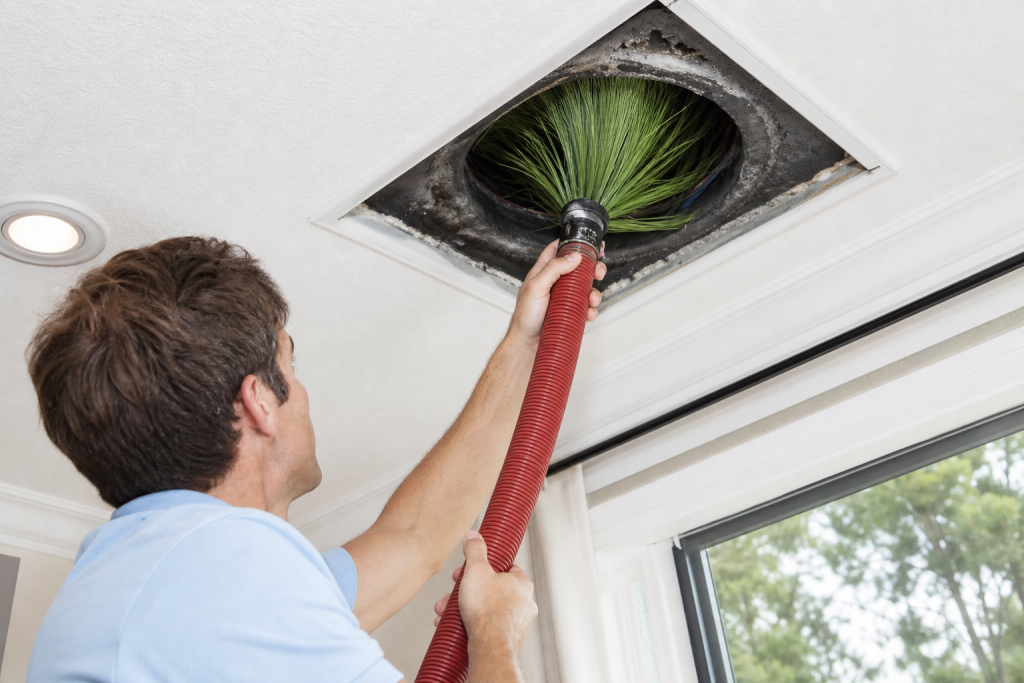
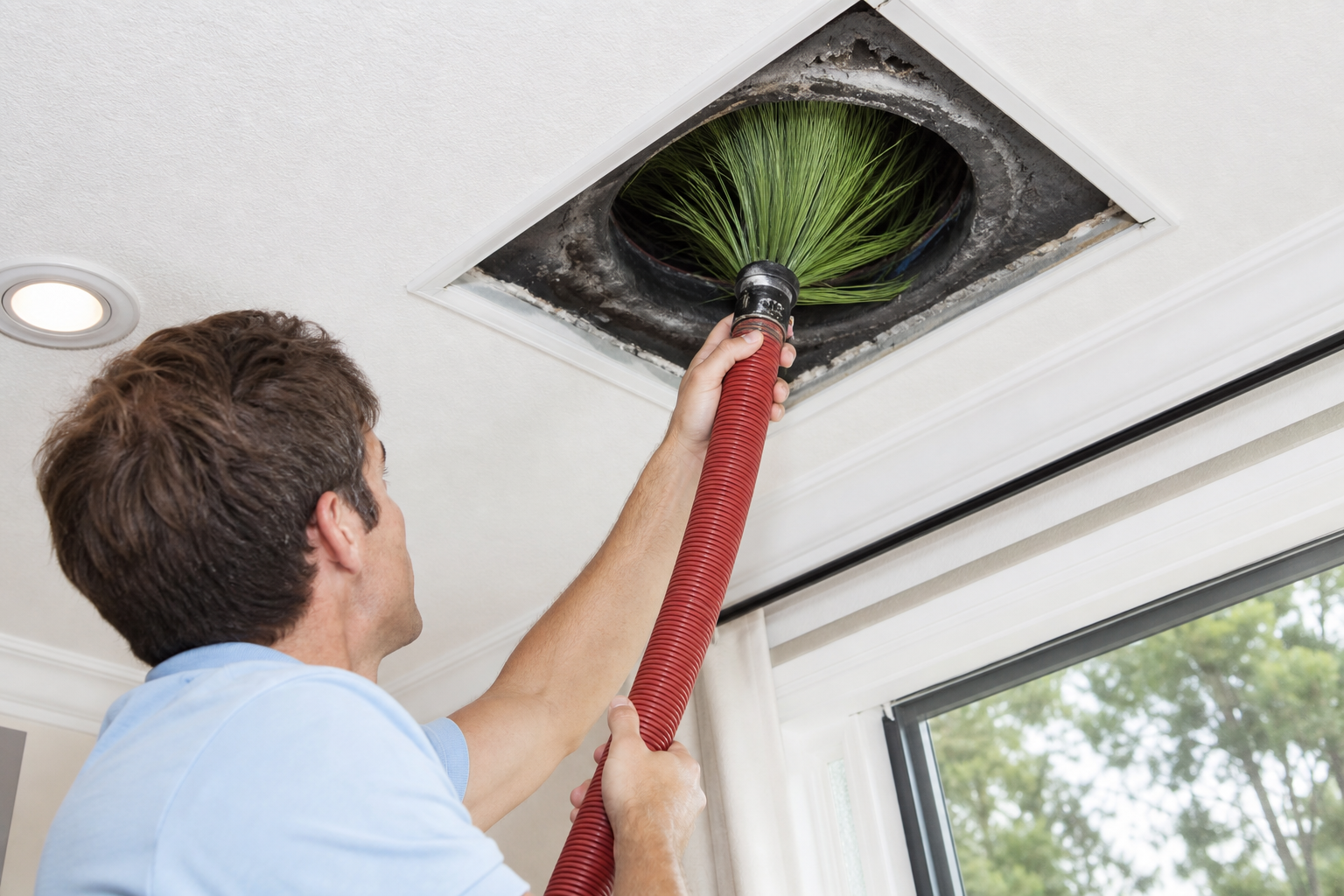
Here’s what that means in a New Haven colonial or a post-war cape: your ductwork has bends, dampers, and long trunk lines. A shop vac or portable carpet extractor—sometimes what generalist crews bring—might hit 150 CFM at the nozzle. That suction collapses before it reaches your second-floor returns. Nikro’s negative-pressure design creates vacuum at the collection point while the technician uses mechanical agitation (brushes, whips, or compressed air tools) to knock debris loose upstream. The pressure differential carries it out of your house, not into your living room.
Key specifications to ask about:
- CFM rating at the vacuum source: 2,000+ for residential, higher for commercial or multi-zone systems
- HEPA filtration on exhaust: 99.97% capture at 0.3 microns—critical because the machine is running inside your home for hours
- Collection containment: bagged or drum-sealed, not open-bin dumping in your driveway
We run Rotobrush and Nikro equipment on jobs throughout New Haven, and the choice depends on your duct configuration and what we’re finding during the pre-cleaning inspection. In our experience, Nikro’s negative-pressure systems excel when we’re dealing with heavy accumulation, post-renovation debris, or homes where the previous owner never had cleaning done.
Why Negative Pressure Beats Portable Brush-and-Vac Methods
The distinction matters because most low-bid duct cleaning in New Haven uses portable electric vacuums with a rotary brush on a long cable. These units are compact, easy to transport, and cheap to operate. They’re also fundamentally limited: they clean only the section of duct the brush can physically reach, and they exhaust filtered air back into your home through a small HEPA cartridge that loads up quickly.
Nikro’s methodology works differently. The technician cuts access points strategically—typically at the plenum, main trunk, and branch returns—then seals the system to create a controlled pressure zone. The vacuum draws from one point while agitation tools work from others. This means:
- Whole-system extraction: debris moves toward the collection point from every connected branch, not just the reachable ones
- No recirculation: dirty air leaves the building through sealed hose runs, not through a portable unit’s exhaust vent in your hallway
- Measurable results: we can verify pressure differential across zones and inspect downstream with cameras to confirm debris removal
Last month we were in a Westville home where a previous service had run a brush-and-vac through the first-floor supplies but never touched the returns. The owner was still getting dust plumes every time the furnace cycled. We set up negative pressure at the air handler, ran agitation through all returns and supplies, and pulled out what had been sitting above the filter rack for years. That’s the difference between owning equipment and understanding the system.
HEPA Filtration During Cleaning: The Detail Most Crews Skip
Here’s a question we ask homeowners in New Haven to consider: if your ducts are dirty enough to need cleaning, do you want that debris filtered before it leaves the machine, or after it’s already circulated through your house?
Nikro’s industrial vacuums use true HEPA filtration on the exhaust stream—not just a pleated pre-filter that catches visible particles. In a typical residential job, the machine runs for two to four hours. Without HEPA containment, ultrafine particles (the ones that penetrate deep into lungs, that aggravate asthma, that carry mold spores) pass through standard filters and redistribute through your living space while the crew works.
We see this especially in older New Haven homes with original plaster and lath, where decades of renovation dust, lead paint fragments, and organic material have accumulated. The cleaning process itself can become an exposure event if the equipment doesn’t contain what it collects. When we set up our Nikro system, the HEPA stage is non-negotiable—it’s not an upgrade, it’s how the machine is supposed to run.
If a contractor tells you their “high-efficiency filter” is sufficient, ask for the MERV rating or HEPA certification. If they hesitate, that’s your answer.
How to Verify a Contractor Actually Knows Nikro Equipment
Brand-dropping is common. Verification is rare. If a New Haven contractor claims they use Nikro systems, here are the specific questions that separate actual technicians from salespeople reading from a script:
- “What’s your typical access point strategy for a [your home type]?” They should mention plenum cuts, trunk access, and branch isolation—not just “we put the hose in the vent.”
- “What CFM are you running, and how do you maintain it across long duct runs?” Look for discussion of hose diameter, seal integrity, and auxiliary blowers if needed.
- “How do you verify the job is complete?” Camera inspection, pressure testing, or visual register checks should be part of the answer. “You’ll notice less dust” is not a verification method.
- “What happens to the debris?” Contained bagging or sealed drum disposal, not dumping in your trash cans or driveway.
We’ve had homeowners in East Rock and Wooster Square tell us they asked these questions and the contractor immediately pivoted to price or “trust our experience.” That’s not confidence—that’s deflection. Brian Rivera runs every job as lead technician, and we’ll explain the setup before we start because you’re entitled to understand what’s happening inside your walls.
When to call a pro: If your ducts haven’t been cleaned in 5+ years, you’ve completed renovations, you have allergy or asthma sufferers in the home, or you can see debris at the registers, it’s time for a professional assessment. We don’t recommend DIY duct cleaning—the risk of damaging flex duct, dislodging connections, or creating contamination events outweighs any savings.
Related services in New Haven: We also provide Air Duct Cleaning in Milford, Dryer Vent Cleaning in Milford, and HVAC Cleaning in Milford for homeowners throughout the region.
What You Should See After a Proper Nikro Cleaning
Professional-grade equipment changes what completion looks like. After a Nikro negative-pressure cleaning, you should expect documentation—not just a handshake and a bill.
At minimum:
- Before-and-after camera footage from inside the ductwork, timestamped and dated
- Filter condition documentation—your filter should be replaced or noted as serviceable post-cleaning
- System performance notes—static pressure readings if the contractor is thorough, or at least airflow observations at registers
- Containment verification—the HEPA filters and collection bags should be sealed and visible, not mysteriously absent
In our work across New Haven, we document every job with interior duct photography. Homeowners are often surprised by what we find—construction debris from a 1980s renovation, a bird nest in a unused return, or simply a uniform coating of fine particulate that explains why the furniture dusts itself weekly. After a proper Nikro cleaning, the difference is visible and verifiable, not theoretical.
275 homeowners have rated our work, and the consistent feedback we hear is that showing the evidence matters more than any promise. Your air quality, diagnosed and treated—that’s the standard we hold ourselves to.
The Bottom Line
Nikro equipment is a legitimate differentiator in duct cleaning, but only when operated by technicians who understand negative-pressure physics, access strategy, and containment protocols. The brand name alone doesn’t protect your home from sloppy technique. In New Haven’s mix of historic properties and newer construction, the right approach varies by building—and the contractor should be able to explain why without defaulting to a one-size-fits-all pitch.
Key takeaways:
- True Nikro methodology uses 2,000+ CFM negative pressure with whole-system containment, not portable brush-and-vac spot cleaning
- HEPA exhaust filtration protects indoor air quality during the job, not just after
- Verify contractor knowledge with specific technical questions—brand ownership doesn’t guarantee competent operation
- Post-job documentation should include visual proof of debris removal
- Owner-operated accountability means the technician running the equipment is personally invested in the outcome
If you’re in New Haven and want to discuss whether your home needs duct cleaning—or whether your previous service actually accomplished what you paid for—Northstar Air Duct Cleaning Service Greater New Haven offers free estimates. Call (844) 981-4535 and Brian Rivera will assess your system directly.
Frequently Asked Questions
Residential duct cleaning in New Haven typically ranges from $400 to $800 for a standard single-system home, depending on duct complexity, accessibility, and whether sanitizing or sealing is included. Larger homes, multiple HVAC zones, or post-renovation recovery can push toward $1,200+. Call (844) 981-4535 for an exact quote—estimates are free and we assess your specific layout before pricing.
Every 3 to 5 years for typical households, or sooner if you have pets, allergy sufferers, recent renovations, or visible mold. New Haven’s seasonal humidity swings and older housing stock can accelerate accumulation in returns and trunk lines. We inspect first and recommend only what’s actually needed—275 homeowners agree that honest assessment beats arbitrary scheduling.
You can reach a few feet from each register, but you won’t access the trunk lines, plenum, or returns where most debris collects. More importantly, disturbing accumulated material without containment can worsen indoor air quality. We don’t recommend DIY duct cleaning for anything beyond surface register maintenance—call (844) 981-4535 if you’re considering a thorough cleaning.
Air duct cleaning targets the distribution network—supply and return ducts, registers, and grilles. HVAC cleaning includes the air handler, coils, blower, and cabinet where mold and debris also accumulate. For complete system restoration, both are typically needed. We offer full-scope service from cleaning to sealing so you’re not coordinating multiple contractors.
Written by Brian Rivera, Owner & Lead Technician at Northstar Air Duct Cleaning Service Greater New Haven, serving New Haven since 2018.
Need Air Duct Cleaning Help?
Call Northstar Air Duct Cleaning Service Greater New Haven — licensed & insured, here with fast after-hours help in New Haven.
(844) 981-4535