
Fast, Reliable Air Quality & Sanitizing Across Port Jefferson Station
Air quality and sanitizing in Port Jefferson Station typically costs $350–$850 for whole-home treatment, with mold remediation and UV light installation running toward the higher end due to the hamlet’s unique coastal conditions. Most jobs are completed in a single visit, and we can often schedule within 48 hours for Port Jefferson Station residents.
We’re familiar with the ranch homes along Jayne Boulevard, the cape cods tucked behind Route 112, and the older subdivisions near the Port Jefferson Station–Coram border. Brian Rivera, our owner and lead technician, has been treating duct systems in this exact market for eight years. We know what oil-heat soot looks like when it’s been collecting since the Carter administration. We know how the fog rolls in off Long Island Sound and where it causes condensation inside duct chases. If you’re in 11776 and your vents smell musty on damp mornings, or your allergy symptoms spike when the heat kicks on, call us at (844) 981-4535 for a free estimate.
Why Northstar Air Duct Cleaning Service Greater New Haven Is Port Jefferson Station’s Preferred Air Quality & Sanitizing Company
Our Air Quality & Sanitizing team doesn’t treat Port Jefferson Station as another pin on a map. Brian Rivera shows up personally, runs the Rotobrush and Nikro equipment himself, and diagnoses what’s actually growing inside your ducts—not what a sales script predicts.
275 homeowners have rated our work, averaging 4.9 stars. That consistency matters in a market where low-bid duct cleaners vacuum visible debris and call it done. We hear from Port Jefferson Station customers after those jobs fail: the musty smell returns in weeks because the root cause—oil-soot film holding moisture, or salt-air corrosion creating new particulate sources—was never addressed.
Response time to Port Jefferson Station is typically next-day or same-week, not the two-week windows common with franchise operations routing crews from Nassau County. We’re coming from New Haven, but we know the North Shore corridor well and schedule Suffolk County jobs in efficient clusters.
Our local knowledge runs specific. We know which 1960s ranches near the harbor have galvanized trunk lines running through crawl spaces that flood seasonally. We know the 1970s splits off Old Town Road where return-air chases were never properly sealed, pulling humid outdoor air directly into the system. That expertise changes what we treat and how.
Our Air Quality & Sanitizing Services in Port Jefferson Station
Mold Treatment
Port Jefferson Station’s position roughly a mile inland from Long Island Sound creates a marine moisture environment that inland Suffolk County communities simply don’t face. Seasonal fog rolls in, relative humidity spikes, and that moisture finds its way into duct systems—especially the original sheet-metal runs in unconditioned crawl spaces and low attic chases common to post-WWII ranch and cape homes here.
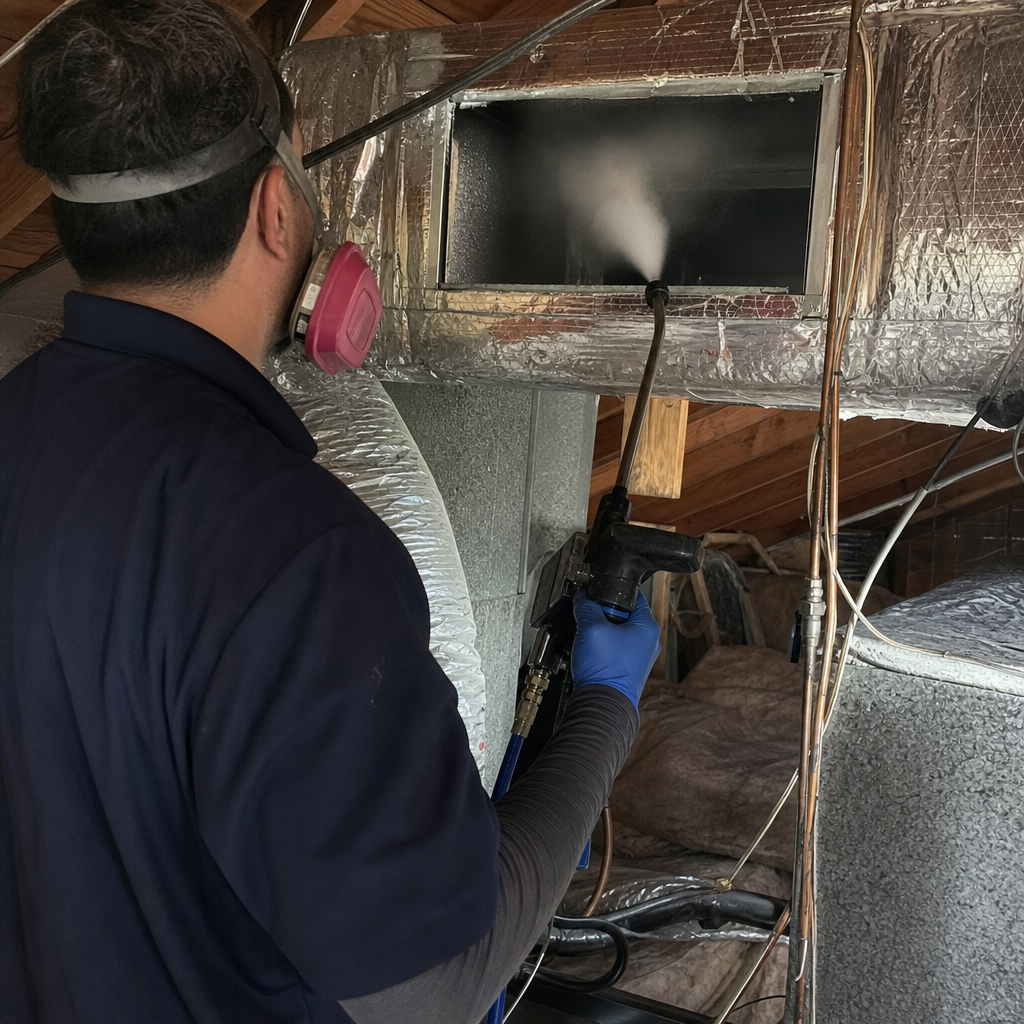
The compounding factor is Long Island’s heavy reliance on fuel-oil heat. In Port Jefferson Station’s 1950s–1970s housing stock, decades of oil combustion leave a thin, greasy soot film on duct interiors. That film acts as an adhesive, trapping mold spores and creating colonies that vacuuming alone won’t dislodge. Our mold treatment applies EPA-registered biocides—compatible with Abatement Technologies protocols—after mechanical agitation with Rotobrush systems removes the debris layer. Typical mold treatment in Port Jefferson Station runs $450–$750 for whole-home systems, depending on contamination extent and duct accessibility.
Bacteria Sanitizing
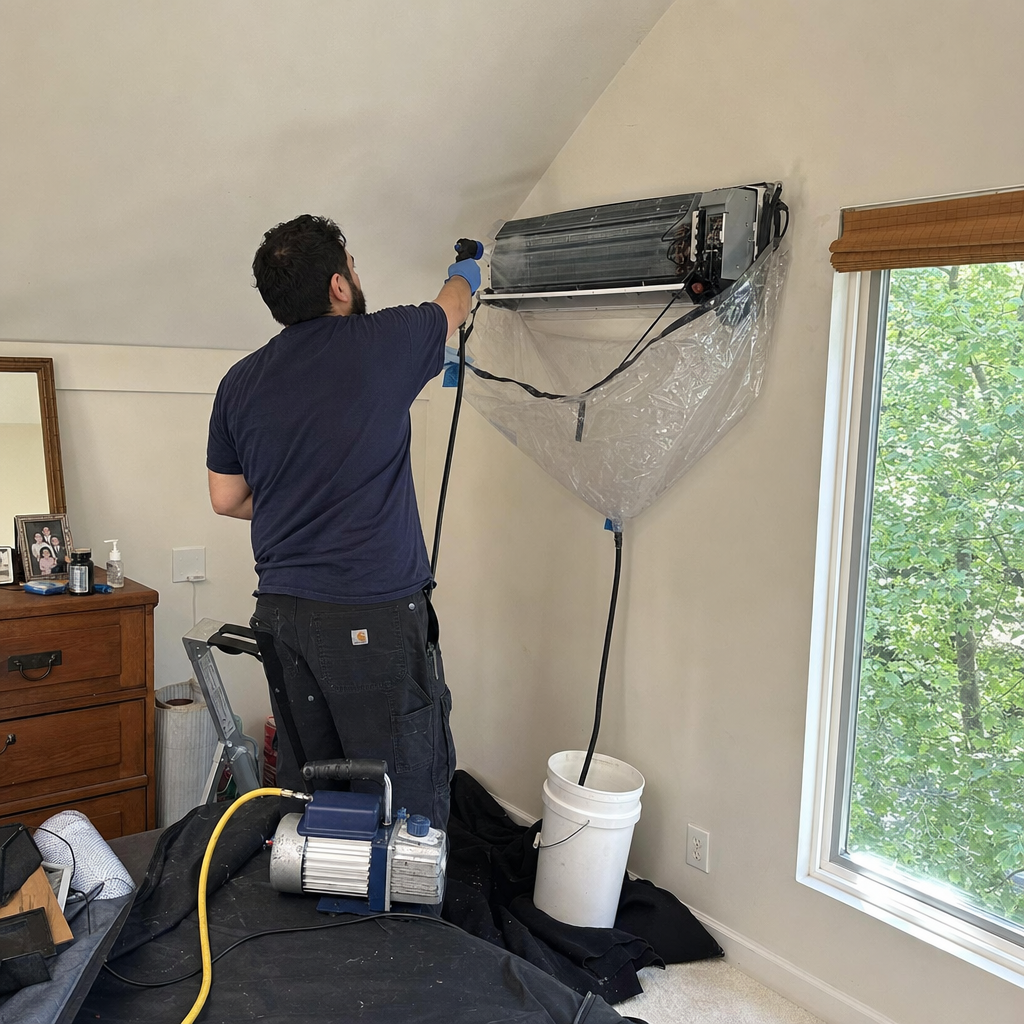
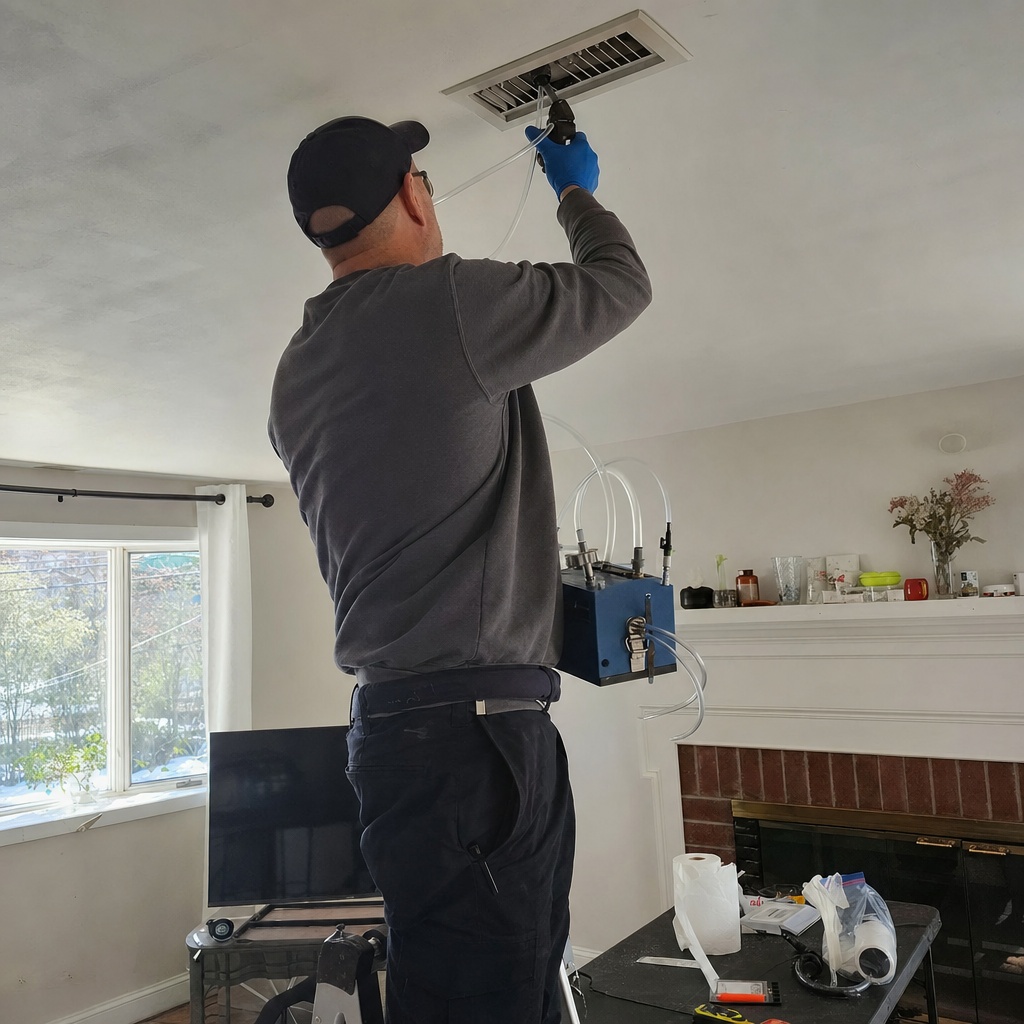
Bacteria sanitizing targets the microbial load that builds in ducts where moisture and organic material coexist. In Port Jefferson Station, the oil-soot + humidity synergy creates exactly that environment. We apply hospital-grade sanitizing agents through the full duct network, not just at registers where homeowners might notice. The process takes 3–4 hours for a typical ranch home and includes post-treatment air sampling verification. $350–$550 for standard residential systems.
Odor Removal
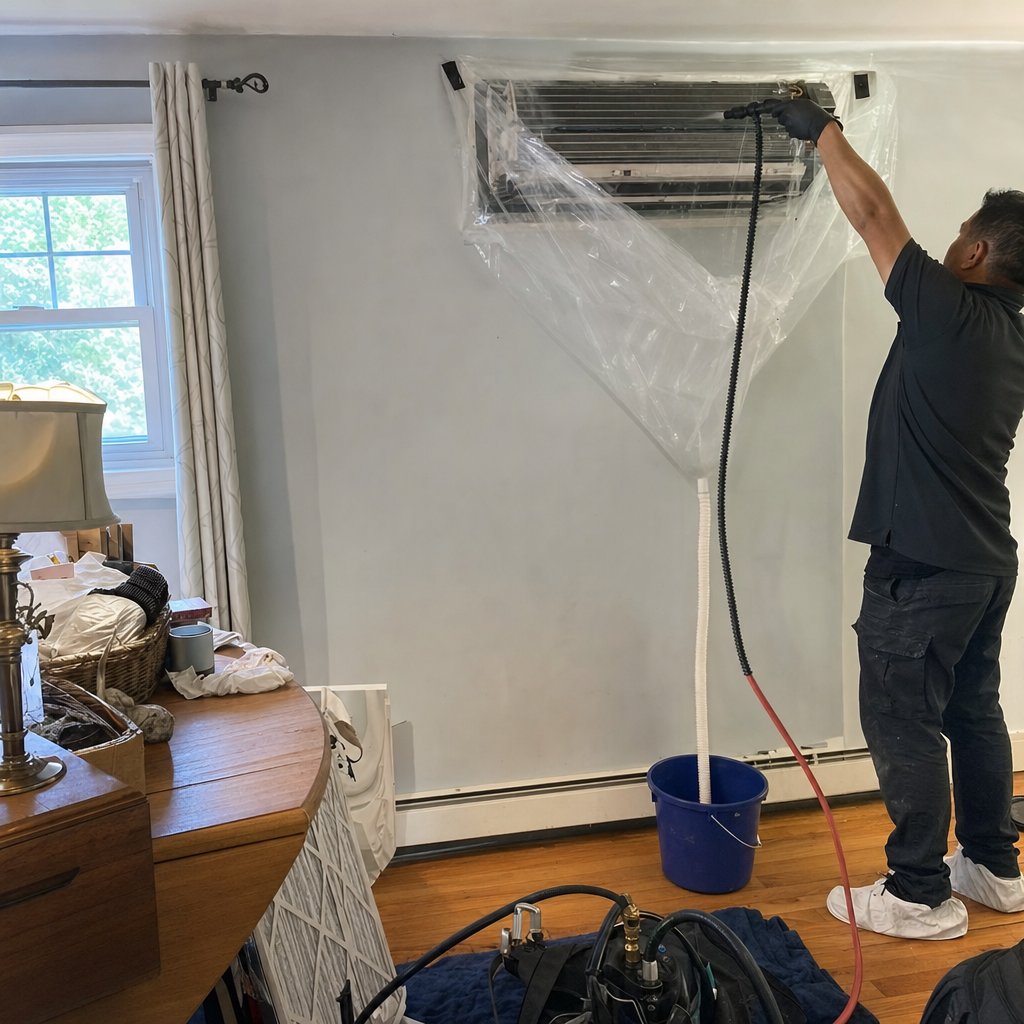
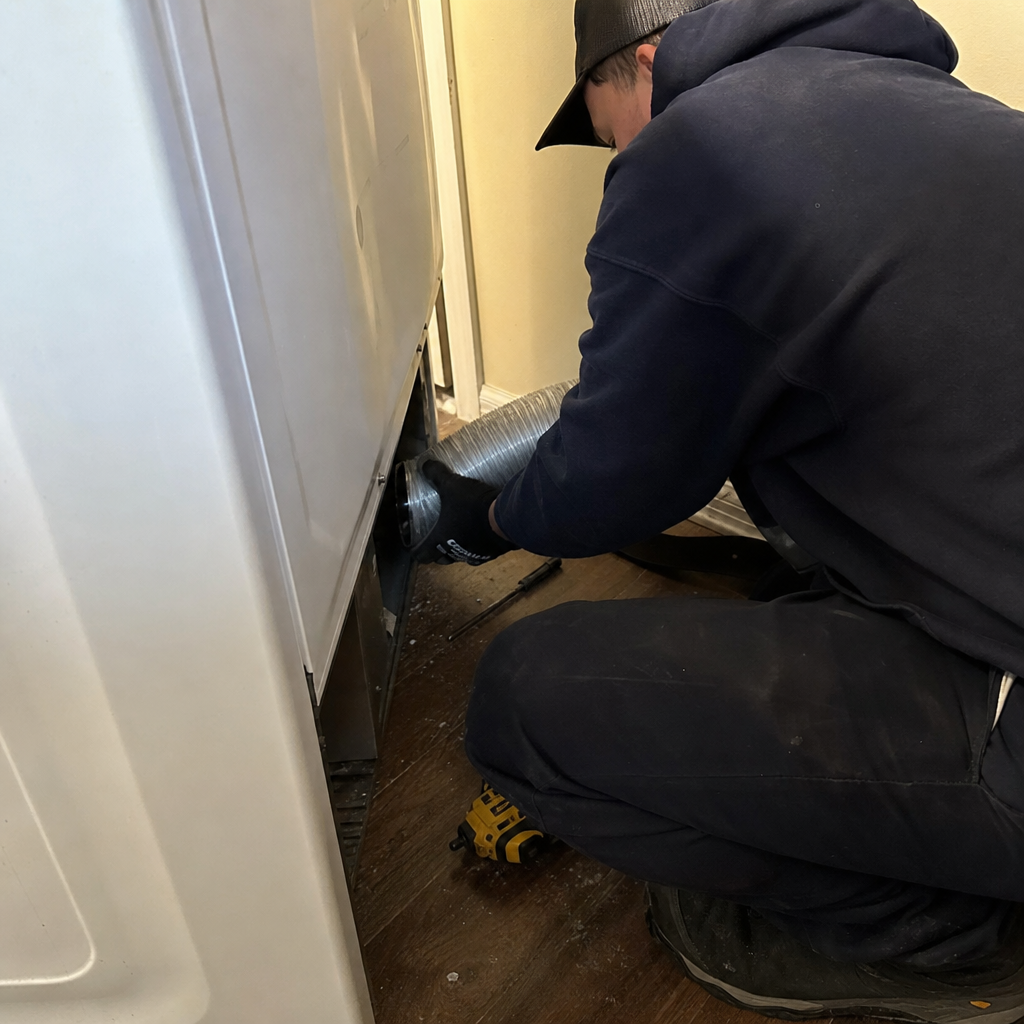
The musty, slightly acrid smell that Port Jefferson Station homeowners describe—especially on damp Sound mornings—usually traces to mold metabolites and oil-soot oxidation products trapped in ductwork. Surface cleaning doesn’t reach the source. We use source-removal agitation followed by targeted oxidizing treatments that neutralize odor compounds at the molecular level, not masking agents that fade in days. $300–$500 when bundled with cleaning; $400–$650 as standalone odor remediation.
UV Light Installation
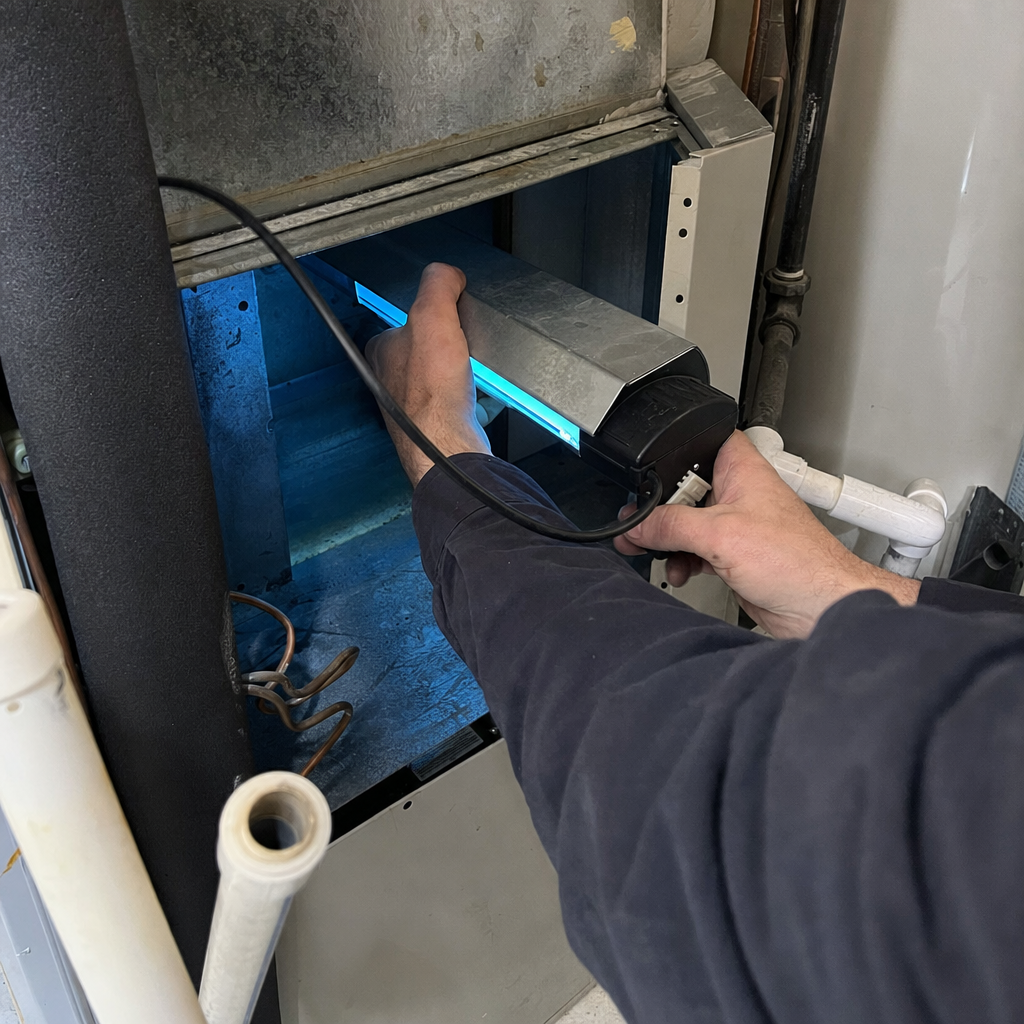
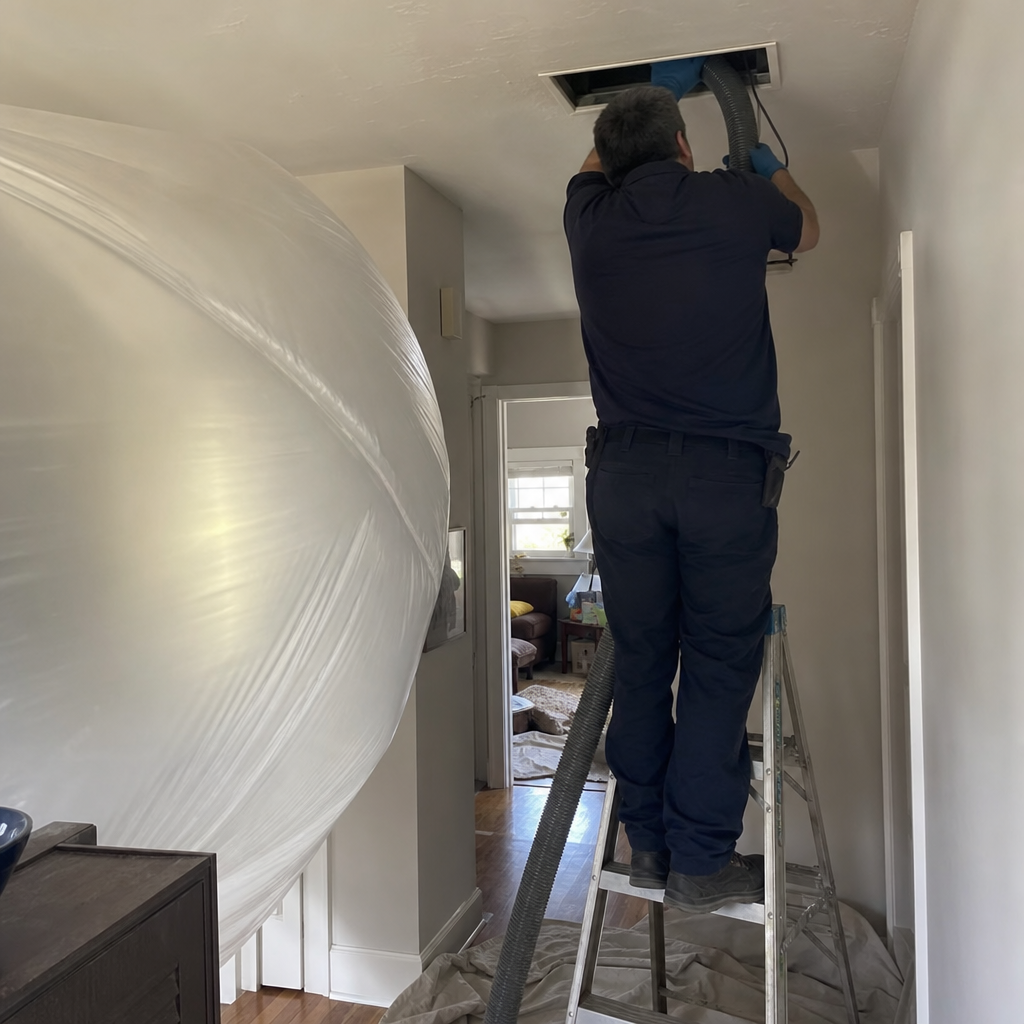
UV-C light installation is particularly effective for Port Jefferson Station homes because it provides continuous suppression of microbial regrowth in conditions where humidity constantly reintroduces the problem. We install Honeywell UV-C lamps in the supply plenum and downstream critical points, creating a sterilizing barrier that activates whenever the blower runs. This is the fix we applied on that Jayne Boulevard ranch: after Rotobrush cleaning removed the oil-soot debris, UV-C lights neutralized residual microbial growth and eliminated the recurring musty smell. $600–$950 installed, with lamp replacement every 2–3 years at $85–$140.
Air Purifier Installation
Whole-home air purifiers with HEPA or activated-carbon stages address particulate and chemical contaminants that bypass standard filtration. For Port Jefferson Station’s salt-air and oil-soot environment, we size and install units compatible with existing Honeywell and Aprilaire systems. $800–$1,400 for most residential installations.

Allergen Reduction
Coastal Long Island’s pollen loads—tree pollen in spring, ragweed in fall—combine with dust mite populations thriving in humid duct environments. Our allergen reduction protocol includes mechanical removal, sanitizing, and filtration upgrades sized to the specific particle load. For families with asthma or allergy sufferers in Port Jefferson Station, this often produces the most noticeable immediate improvement. $400–$700 for comprehensive treatment.
What happens when you call
- 1
A real person answersNo phone trees — you reach a local pro.
- 2
You get an upfront price rangeHonest numbers before anyone is dispatched.
- 3
A background-checked tech heads outLicensed & insured, dispatched right away.
- 4
You approve before work beginsNothing starts until you say go.
Trusted Brands We Service in Port Jefferson Station
We work fluently with the IAQ and filtration brands already installed in Port Jefferson Station homes: Honeywell, Aprilaire, and Abatement Technologies systems are common here, and we stock replacement lamps, filters, and compatible components to avoid the week-long waits that franchise operations impose. Our Rotobrush and Nikro equipment is purpose-built for duct cleaning—professional-grade systems, not consumer vacuums with duct attachments. When we find a Guardsman filtration system in place, we service it; when an upgrade makes sense, we recommend based on what your specific duct configuration and contamination pattern actually need, not what’s on promotion this month.
Common Air Quality & Sanitizing Problems We See in Port Jefferson Station Homes
- Oil-soot film trapping coastal moisture: Decades of fuel-oil combustion coat duct interiors in a greasy residue unique to Long Island’s heating profile. That film holds humidity from Sound-fog events, creating a sustained mold habitat that simple vacuuming can’t resolve. We see this in roughly 70% of pre-1980 Port Jefferson Station homes we inspect.
- Galvanized duct corrosion from salt-air infiltration: Original sheet-metal trunk lines in crawl spaces and chases corrode as salt-laden outdoor air enters through poorly sealed returns. Rust particles flake into the airstream, appearing as reddish dust around registers. This isn’t a filtration problem—it’s a duct integrity and sealing problem that requires repair alongside sanitizing.
- Unsealed return chases pulling humid outdoor air: Many Port Jefferson Station ranches were built with return-air pathways through wall cavities and floor chases that were never properly sealed. The system literally draws outdoor air—complete with Long Island Sound humidity and salt—directly into circulation, accelerating microbial growth year-round regardless of thermostat settings.
- Condensation pooling in low attic chases: Cape cod and 1.5-story homes common to the hamlet route ducts through attic spaces with minimal insulation. Coastal temperature differentials create condensation that drips back into ductwork, particularly on shoulder seasons when daytime warming meets cool evening air masses off the Sound.
Pricing for Air Quality & Sanitizing in Port Jefferson Station, NY
| Service | Typical Range in Port Jefferson Station |
|---|---|
| Mold Treatment (whole-home) | $450 – $750 |
| Bacteria Sanitizing | $350 – $550 |
| Odor Removal (standalone) | $400 – $650 |
| UV Light Installation | $600 – $950 |
| Air Purifier Installation | $800 – $1,400 |
| Allergen Reduction Package | $400 – $700 |
| Comprehensive Cleaning + Sanitizing Bundle | $650 – $1,100 |
What moves you within these ranges? Duct accessibility (crawl space vs. basement), contamination severity, and whether we’re treating symptoms or root causes. A home with oil-soot buildup, active mold, and unsealed returns requires more than sanitizing alone—duct repair and sealing may be necessary to prevent recurrence. We price upfront after inspection, not after starting work. Estimates are free. Call (844) 981-4535 to schedule.
We Also Serve Cities Near Port Jefferson Station
We regularly schedule air quality and sanitizing work in Terryville, Mount Sinai, Port Jefferson, and Coram—often clustering same-day appointments along the Route 112 and North Country Road corridors. If you’re in these communities and dealing with similar coastal humidity and oil-heat conditions, the same expertise applies.
Serving Port Jefferson Station, NY — Our Local Coverage Area
We’re based in the Port Jefferson Station area and know this community well. Use the map below to see our service coverage — if you’re nearby, we can almost certainly help.
FAQs — Air Quality & Sanitizing in Port Jefferson Station
Oil combustion produces heavier, greasier particulate residue than natural gas, and Port Jefferson Station’s high concentration of aging oil-fired systems means decades of this soot have accumulated in ductwork. That greasy film traps moisture from Long Island Sound humidity in ways gas-heat residue doesn’t, creating a unique mold-promoting environment that requires chemical sanitizing beyond mechanical cleaning. Call (844) 981-4535 for an inspection if you smell mustiness when your heat cycles on.
Homes near Jayne Boulevard sit in some of Port Jefferson Station’s lowest-lying terrain, where Sound-fog accumulation is heaviest and crawl-space humidity persists longest. UV-C lights provide continuous microbial suppression in supply plenums where damp conditions otherwise foster rapid regrowth after cleaning. We installed Honeywell UV-C systems in three Jayne Boulevard ranches last year, all reporting eliminated musty odors within two heating cycles. Estimates are free—call (844) 981-4535.
We most commonly identify Cladosporium, Penicillium, and Aspergillus species in Port Jefferson Station ductwork—all thriving in the humid, soot-rich environment this market presents. Cladosporium particularly favors the salt-air exposure here. Lab identification guides our biocide selection; we don’t guess. If you suspect mold, call (844) 981-4535 for sampling and targeted treatment.
Air purifiers reduce airborne particulates including rust flakes from corroding ducts, but they don’t stop the corrosion itself. For Port Jefferson Station homes with salt-air infiltration, we typically recommend sealing return chases and repairing corroded sections first, then adding filtration to capture residual particles. A purifier alone treats symptoms; the combination addresses cause. We’ll inspect and recommend the right sequence—call (844) 981-4535 for a free assessment.
Route 112 runs through some of Port Jefferson Station’s densest 1960s–70s housing stock, with original ductwork now 50–60 years old and oil-soot accumulation at its maximum. These homes benefit from more frequent inspection—every 2–3 years rather than the standard 5-year recommendation—and sanitizing when oil-soot film or moisture indicators appear. We’ve treated dozens of Route 112 homes where delayed maintenance required costlier remediation. Call (844) 981-4535 to assess your system’s condition.
Ready to address what’s actually growing in your ducts? Brian Rivera will inspect your Port Jefferson Station home personally, diagnose the specific contamination pattern, and recommend treatment that matches your system’s condition—not a generic package. Call (844) 981-4535 for a free estimate. We typically schedule within 48 hours.
Written by Brian Rivera, Owner at Northstar Air Duct Cleaning Service Greater New Haven, serving Port Jefferson Station and the North Shore since 2016.