
How to Choose the Right Air Duct Cleaning Company in New Haven
The right air duct cleaning company in New Haven is one where the person who assesses your system also performs the work, carries accountability for the outcome, and can explain what they found in your ducts without reading from a script. Look for owner-operated or technician-led companies that use professional-grade vacuum systems with HEPA exhaust filtration, document their scope before arriving, and allow post-job verification of completed work. If you’d rather not sort through the options yourself, call Northstar Air Duct Cleaning Service Greater New Haven home at (844) 981-4535 — we offer free estimates and show you exactly what we’re doing before we start.
Here’s what most New Haven homeowners get wrong: they check reviews first, price second, and never ask who’ll actually be crawling through their attic with a vacuum hose. Franchise operations throughout Connecticut often carry 4-star averages not because the work is excellent, but because most customers have never seen inside their ducts before or after. The rating reflects politeness and punctuality, not whether the job actually moved the needle on their indoor air quality.
Owner-Operated vs. Franchise vs. HVAC Generalist: Who Actually Shows Up
The structural model of the company predicts your outcome more reliably than any online rating.
Franchise duct cleaners typically run a sales-and-dispatch model: a call center books the job, a crew of varying experience shows up with equipment they may or may not have been trained on that month. The person who quoted your $99 special isn’t accountable when the technician discovers your system needs access points cut or your flex duct is damaged. We’ve been called into New Haven homes six months after a franchise “cleaning” where the homeowner still had visible debris — because the crew ran a brush for twenty minutes and called it done.
HVAC generalists treat duct cleaning as a shoulder-season add-on. Their technicians are skilled at heating and cooling repair, but duct cleaning isn’t where their training hours go. We’ve seen condenser coils cleaned beautifully while the return trunk line was never touched.
Owner-operated specialists invert this. In our case, Brian Rivera answers the phone, walks the job, and runs the equipment. There’s no information loss between quote and execution, and no one to hide behind if the result is mediocre. Eight years in this trade means we’ve seen the specific duct configurations common in New Haven’s older colonial homes, the retrofit challenges in East Rock Victorians, and the post-renovation debris patterns that follow typical Connecticut remodel timelines.
When you’re interviewing companies, ask directly: “Who will be in my home, and how long have they been doing this?” If the answer is vague, that’s your signal.
Why Technician Certification Matters More Than Company Credentials
NADCA certification at the company level sounds impressive, and it does indicate baseline training standards. But here’s what the certification sticker on the truck doesn’t tell you: which technician actually holds the credential, and whether they’re the one assigned to your job.
In our experience across New Haven, the critical questions are:
- Is the technician who’ll clean my ducts personally certified, or is the company certified on their behalf?
- How many duct cleanings have they completed in homes with my system type?
- Can they explain why they’re choosing a particular cleaning method for my specific duct material?
Brian holds direct, hands-on certification with the equipment we run — Rotobrush and Nikro systems that require specific training for proper brush selection, vacuum calibration, and negative-pressure containment. A company can be NADCA-certified while sending a technician who’s never operated professional-grade duct equipment before your job. The credential travels; the skill doesn’t.
How to Evaluate Equipment Claims Before They Arrive
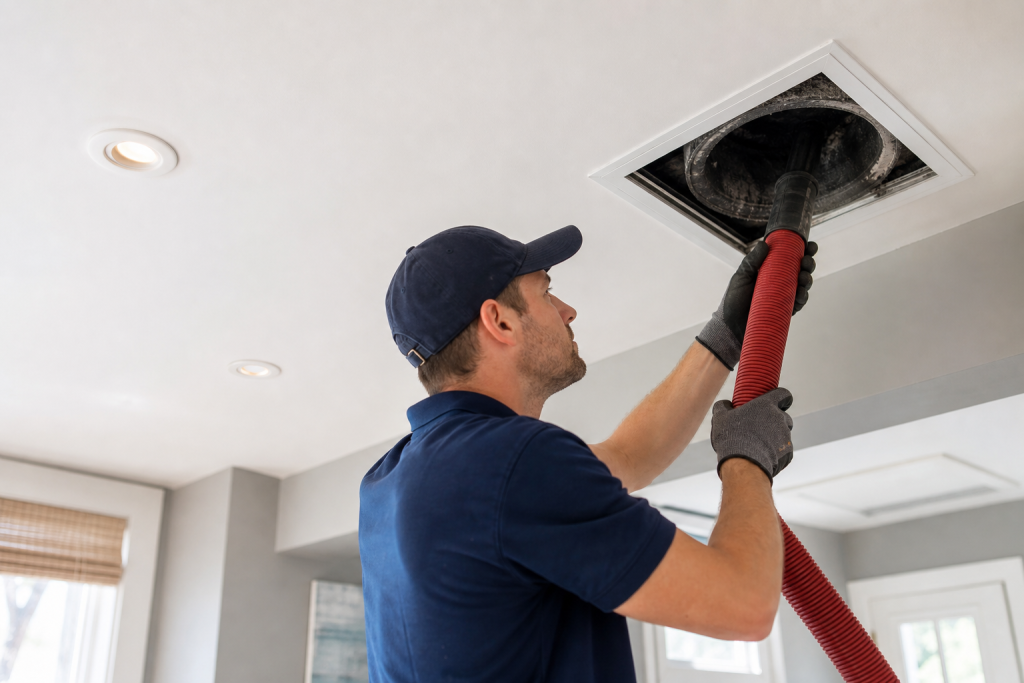
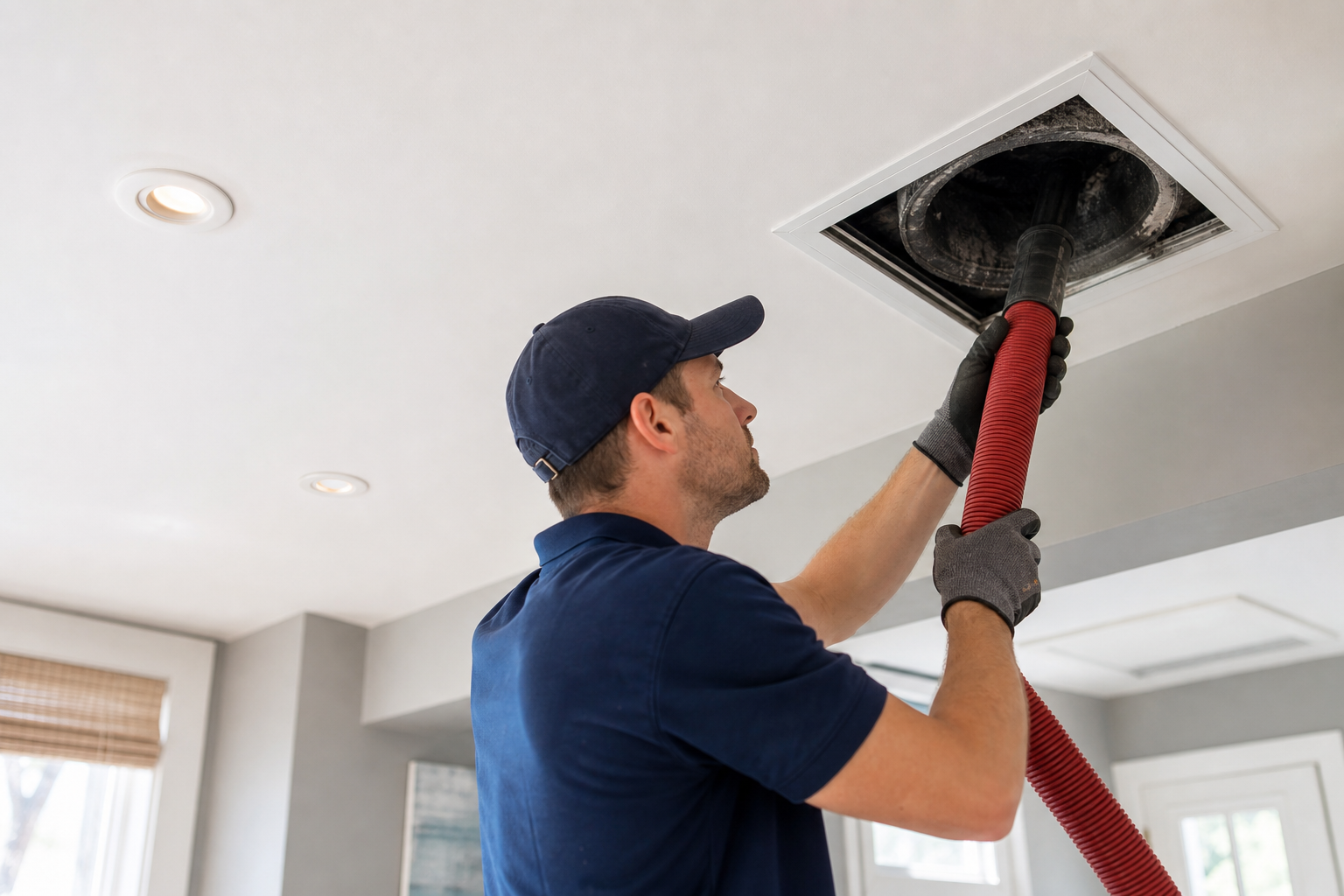
Consumer-grade shop vacuums with long hoses are not duct cleaning equipment. Neither are carpet-cleaning trucks with an adapter kit. Professional duct cleaning requires negative-pressure containment systems that prevent debris from escaping into your living space during the process.
Ask any New Haven company these specific questions:
- What vacuum system do you use? Look for names like Rotobrush or Nikro — purpose-built duct cleaning platforms with HEPA exhaust filtration. If they say “a commercial shop vac” or dodge the question, keep looking.
- Is your equipment self-contained or truck-mounted, and where does the exhaust go? Proper systems exhaust outside the home or through HEPA filtration. We’ve seen crews vent dirty air back into the basement.
- What agitation method do you use for my duct material? Metal trunk lines tolerate rotary brushes; flex duct requires softer methods. A technician who doesn’t ask about your duct type before arriving isn’t planning — they’re hoping.
We run Rotobrush and Nikro equipment specifically because they’re engineered for residential duct geometry, with adjustable brush torque and vacuum strength that matches the debris load we find. Last month in Westville, we cleaned a system where the previous service had snapped a rotary cable through an aging flex duct because they treated it like galvanized steel. Equipment knowledge prevents damage.
What a Legitimate Pre-Job Conversation Should Cover
A quality duct cleaning starts before the truck leaves the shop. When Brian takes your call, here’s what we document:
- System layout and age: How many returns and supplies? Basement or attic HVAC? Original ductwork or retrofit?
- Access point plan: Where will we enter the system? Are there existing access panels, or do we need to cut and seal new ones?
- Scope documentation: Exactly which components are included — trunk lines, branch ducts, registers, return plenum, coil cabinet?
- Contingency discussion: What happens if we find damaged ductwork, disconnected joints, or pre-existing mold?
If a company skips straight to “When works for Tuesday?” without asking about your system, they’re not estimating — they’re scheduling. That $199 special becomes $600 once they’re in your home and “discover” what any competent technician would have asked about upfront.
We also discuss whether your home has Aprilaire or Honeywell filtration systems already installed, since our cleaning approach preserves those components and we can assess whether they’re functioning post-service. Compatibility with existing IAQ equipment matters — we’ve been trained on Aprilaire, Honeywell, Abatement Technologies, and Guardsman systems specifically so we don’t disrupt what’s working.
Post-Job Verification: How to Know They Actually Did the Work
You don’t need a borescope or technical training to verify a duct cleaning. Here’s what any New Haven homeowner can check:
- Visual register inspection: Remove a supply register. The interior of the duct behind it should be visibly cleaner than adjacent areas you know weren’t touched.
- Debris collection: A legitimate job produces debris. Ask to see what was removed — not because you want to inspect it closely, but because a company that can’t show you anything removed nothing.
- System airflow change: After a thorough cleaning, you should notice improved airflow at registers that were previously weak. This isn’t subtle — it’s measurable with a tissue or your hand.
- Documentation: We provide before-and-after photos from inside the ductwork, taken with our inspection camera. If a company won’t document, they can’t prove completion.
275 homeowners have left us reviews averaging 4.9 stars, and we believe a significant portion of that satisfaction comes from this transparency. You see what we saw, and you see what changed.
When to Call a Professional in New Haven
Call when you can’t verify the problem yourself or when the system involves components that affect whole-home air distribution. If you’re noticing uneven heating, visible dust emission from registers, or worsening allergy symptoms after running the HVAC, a professional assessment will identify whether the issue is duct contamination, leakage, or equipment malfunction. In New Haven’s climate — with humid summers that encourage microbial growth and heating seasons that recirculate trapped particulates — duct conditions degrade predictably and recover measurably with proper service.
Related services in New Haven: We also provide Air Duct Cleaning in Milford, Dryer Vent Cleaning in Milford, and HVAC Cleaning in Milford for homeowners throughout the greater New Haven area.
Key Takeaways
- Ask who performs the work — owner-operated models deliver accountability that franchise dispatch can’t replicate
- Verify technician-level certification, not just company-level credentials
- Demand specific equipment names; professional-grade means Rotobrush, Nikro, or equivalent purpose-built systems
- Insist on pre-job scope documentation — vague scheduling without assessment predicts vague results
- Verify post-job with visual checks, debris review, and photographic documentation
The Bottom Line
Choosing the right duct cleaning company in New Haven means looking past surface signals — star ratings, low prices, brand recognition — and examining the structure of who does the work and how they account for it. The companies worth hiring will welcome these questions, not deflect them. They’ll explain their equipment by name, walk your system before quoting, and show you what they accomplished.
If you’re in New Haven and want an owner-technician who’ll assess your ducts honestly, document the work, and stand behind the result, Northstar Air Duct Cleaning Service Greater New Haven home offers free estimates. Call (844) 981-4535 and Brian will walk through what we actually find in systems like yours.
Frequently Asked Questions
Professional air duct cleaning in New Haven typically ranges from $300 to $600 for a standard residential system, with larger homes or complex layouts running higher. Be wary of services advertising below $200 — they often recover costs through upsells or perform superficial work that doesn’t access the full system. Call (844) 981-4535 for a free, specific estimate based on your home’s layout and duct configuration.
No — Connecticut does not require NADCA certification for duct cleaning companies. While NADCA membership indicates baseline training standards, the more important question is whether the individual technician performing your work holds current certification and direct experience with professional-grade equipment. Always verify technician-level qualifications rather than relying on company-level credentials alone.
Every three to five years for typical households, sooner if you have pets, allergy sufferers, recent renovations, or visible mold. New Haven’s seasonal humidity patterns — particularly summer moisture that can enter duct systems — make periodic inspection worthwhile even without obvious symptoms. Homes near I-91 or the Quinnipiac River corridor may accumulate particulates faster due to traffic and industrial proximity.
Homeowners can clean register surfaces and change filters, but full duct cleaning requires professional negative-pressure equipment and access tools that aren’t available for consumer purchase. More importantly, improper cleaning can damage flex duct, dislodge connections, or redistribute contamination throughout the system. For anything beyond surface maintenance, professional service protects your ductwork integrity and ensures complete debris removal. Call (844) 981-4535 to discuss whether your situation warrants full service or if simple maintenance will suffice — estimates are free.
Written by Brian Rivera, Owner & Lead Technician at Northstar Air Duct Cleaning Service Greater New Haven, serving New Haven since 2018.
Need Air Duct Cleaning Help?
Call Northstar Air Duct Cleaning Service Greater New Haven — licensed & insured, here with fast after-hours help in New Haven.
(844) 981-4535