
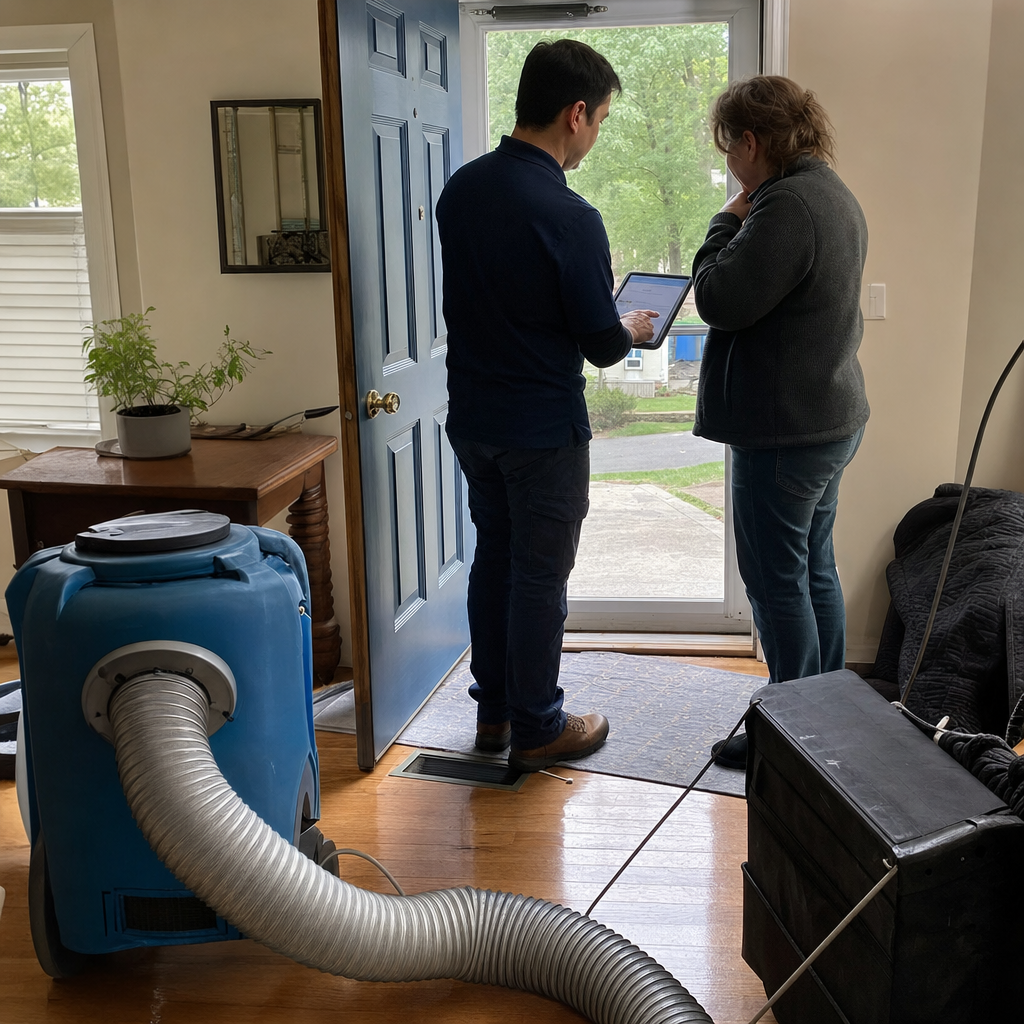
Air Duct Sanitizing Service in New Haven, CT — When Cleaning Alone Won’t Fix the Problem
Air duct sanitizing in New Haven typically costs $250–$550 per system and is performed only after mechanical cleaning has removed physical debris — it’s a targeted antimicrobial treatment for documented biological growth, not a routine add-on. At Northstar, Brian Rivera scopes every system first; we recommend sanitizing only when we find visual mold, tested bacteria, or persistent moisture damage inside your ductwork. Call (844) 981-4535 for a free inspection and honest assessment of whether your ducts actually need it.
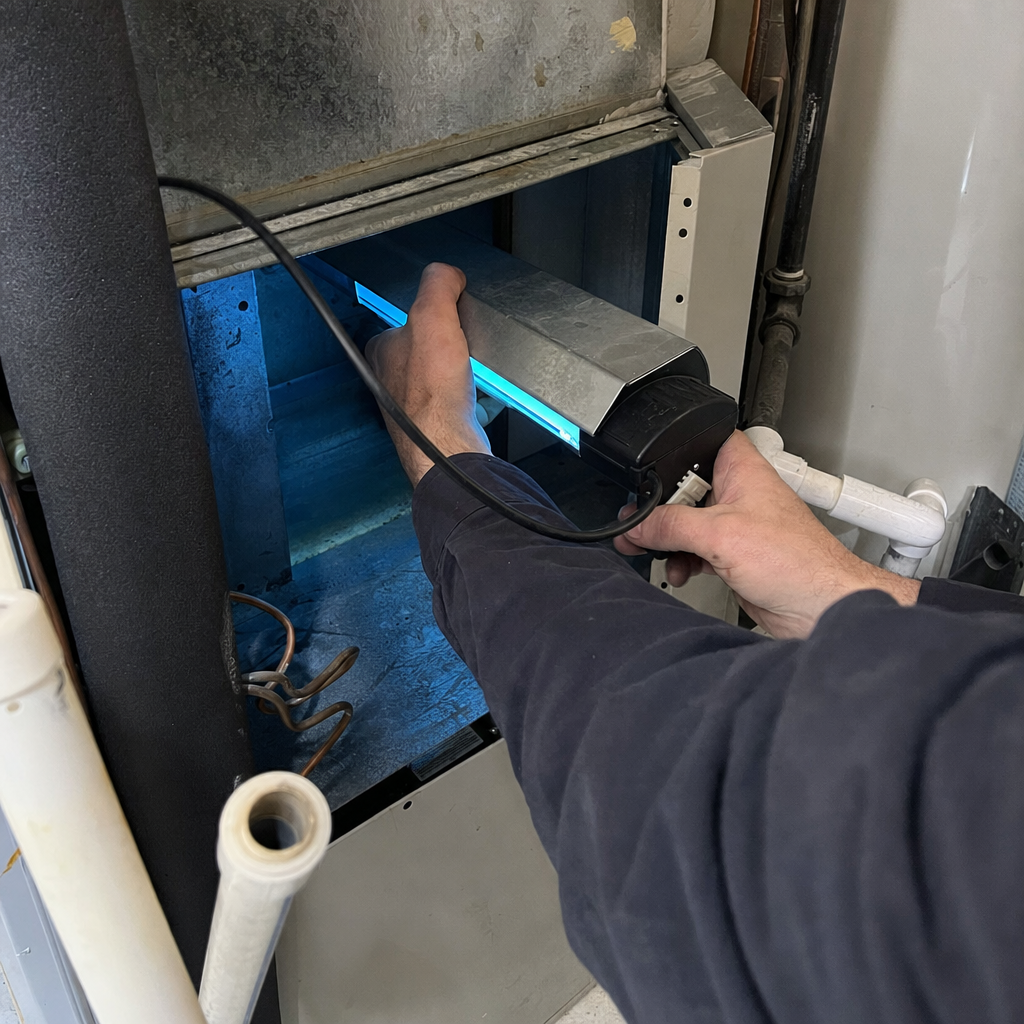
Why New Haven’s Coastal Climate Creates Sanitizing Scenarios Most Inland Cities Don’t See
New Haven sits at the northern tip of Long Island Sound, and that tidal harbor keeps humidity elevated even when thermometers drop. We’ve opened ductwork in January and found condensation beading on uninsulated sheet-metal runs — the kind of persistent moisture that mold colonies need to establish themselves.
In neighborhoods like Wooster Square and Dwight, we’re regularly called to pre-1940 wood-frame multifamily buildings where forced-air systems were retrofitted into structures built for coal or steam heat. The ductwork bends around original plaster walls and timber framing, creating dead-leg runs and uninsulated sections in unconditioned basements. These aren’t design flaws we can fix with a vacuum — they’re structural conditions that make biological growth structurally common rather than exceptional.
Here’s what that looks like in practice:
- Uninsulated galvanized ductwork in East Rock basement crawl spaces condenses through winter, supporting mold that recolonizes within months of cleaning alone
- Yale-adjacent rental properties in Dwight with 20–40 years between cleanings show documented growth, not theoretical risk — we’ve scoped systems where the first cleaning in a generation reveals black mold on the supply plenum
- Original 1920s–1930s crimped ductwork in Edgewood, taped over multiple tenancy cycles, traps moisture against debris that standard brushing can’t fully dislodge
- Condensation on sheet-metal runs feeding second-floor units in triple-deckers creates a recurring cycle: clean in fall, mold returns by spring
Brian grew up in Westville, trained at Gateway Community College in New Haven, and has spent eight years crawling through these exact conditions. He’ll tell you what your system needs — not what adds to the invoice.
What Air Duct Sanitizing Actually Does (And What It Doesn’t)
There’s a meaningful difference between cleaning and sanitizing, and conflating the two is how homeowners get sold treatments they don’t need.
Duct cleaning removes physical debris — dust, pet dander, construction residue, the accumulated grit of decades. We use Rotobrush and Nikro professional-grade equipment with HEPA containment to do this mechanically.
Duct sanitizing applies EPA-registered antimicrobial solutions to surfaces where biological growth has been documented. It’s not preventive. It’s not a “fresh scent” treatment. It’s a post-contamination intervention for mold, bacteria, or other microbiological colonization that cleaning alone won’t eliminate.
The sequence matters: sanitizing a dirty duct is like disinfecting a floor you haven’t swept. The debris shields organisms from contact, and you’ll be calling someone again in six months. We clean first, inspect with scope cameras, and recommend sanitizing only when we can show you the evidence.
What We Use and Why It Matters
Northstar works with Abatement Technologies products specified for post-contamination treatment in HVAC systems — not consumer-grade foggers or deodorizers mislabeled as sanitizers. These are EPA-registered solutions applied with controlled methods that reach duct surfaces without oversaturating insulation or electrical components.
Our equipment compatibility extends to Aprilaire, Honeywell, and Guardsman IAQ systems already installed in many New Haven homes. We don’t guess at integration — we work with the brands your system was built around.
When Sanitizing Is Actually Warranted — And When It Isn’t
We get calls from homeowners who’ve been quoted sanitizing as a line item on every duct cleaning proposal. That’s not how we operate.
Brian serves as lead technician on every job, and his inspection protocol determines whether sanitizing enters the conversation at all. These are the conditions that trigger a recommendation:
- Visual mold identified during camera scoping — typically green, black, or white growth on duct walls, plenum surfaces, or evaporator coils
- Musty or earthy odors persisting after mechanical cleaning, indicating active microbiological activity in porous materials or inaccessible sections
- Documented moisture damage from condensation, flooding, or failed humidification systems, creating the substrate for bacterial colonization
- Post-renovation scenarios where lead paint disturbance or water intrusion has introduced contaminants into the duct system
- Occupant health indicators — particularly asthma or immunocompromised residents — where tested airborne mold spores trace to duct reservoirs
What doesn’t trigger a recommendation: routine maintenance, “it’s been a while,” or a salesperson’s commission structure. We’ve told Westville homeowners their ducts were clean enough to wait another two years. That honesty is why 275 homeowners have left us a 4.9-star average — and why they call back when conditions actually change.
What Sanitizing Costs in New Haven — And What Drives the Range
Pricing reflects system size, contamination severity, and accessibility — not a flat rate applied to every home. Below are the ranges we see across New Haven’s typical housing stock, from compact Dwight rental units to full Victorian systems in East Rock.
| Service Component | Price Range |
|---|---|
| Standard air duct sanitizing (single system, post-cleaning) | $250 – $400 |
| Heavy contamination sanitizing (documented mold, multiple zones) | $350 – $550 |
| Evaporator coil sanitizing (included with full system) | $75 – $150 |
| Return plenum treatment (separate from main trunk) | $50 – $125 |
| Post-sanitizing air quality verification | $100 – $200 |
We provide upfront pricing before any treatment begins — no surprise line items after we’re in your basement. Estimates are free, and we’ll show you the scope footage that justifies any sanitizing recommendation.
Questions to Ask Any Sanitizing Provider in New Haven
Not all “sanitizing” is equal. Before you hire, get specific answers to these questions — and be wary of vague responses:
What product, specifically, are you applying? EPA registration numbers exist for a reason. Consumer-grade foggers and “organic” solutions without antimicrobial claims won’t eliminate established mold colonies.
Is cleaning included first, or is this a standalone spray? Fogging dirty ducts treats the symptom without the source. The debris remains, and so does the protected biology beneath it.
Who’s applying it — a certified technician or a crew member with a handheld sprayer? Application method determines whether surfaces receive adequate contact time without oversaturating system components.
What’s your documentation protocol? We photograph and scope before and after. If a provider won’t show you what they found, question whether they found anything at all.
Northstar’s approach is documented, product-specific, and performed by the same person who assessed your system — Brian Rivera, not a rotating subcontractor with a checklist.
Common Local Scenarios We See in Greater New Haven
These aren’t hypotheticals. They’re patterns from eight years of working in the same neighborhoods, with housing stock that creates predictable conditions.
The Yale-Area Rental with Decades of Neglect
In Dwight and Edgewood, we routinely scope systems in properties where the ductwork hasn’t been opened since the furnace swap-out — sometimes 30-plus years ago. The galvanized sheet-metal is crimped, layered with duct tape from multiple tenancy cycles, and packed with debris that includes residue from informal renovations. Cleaning removes the bulk; sanitizing addresses the biological growth that’s established in the moisture-trapping geometry. We coordinate with property managers who need documentation for tenant health concerns, and we work around academic-year scheduling when possible.
The Post-Renovation Triple-Decker
East Rock and Wooster Square homeowners who’ve renovated pre-1940 multifamily units often call when dust persists months after contractors have left. The issue: retrofit ductwork routed through unintended wall cavities has trapped construction debris in dead-leg runs, and humidity from unconditioned basement sections has activated mold on residual moisture. We clean the construction loading, scope for growth, and sanitize only where documented — treating the root cause, not just the surface complaint.
The Persistent “Musty” System
Some New Haven homeowners have cleaned their ducts elsewhere and still smell mildew when the system cycles. The cause is often mold in porous materials — insulation lining, wooden plenum boxes in older conversions, or evaporator drain pans with chronic overflow. We identify the reservoir with scope cameras, treat with appropriate antimicrobial application, and advise on moisture control — because sanitizing without addressing the condensation source is temporary by design.
Our Sanitizing Process: What Happens on Your Job
Every sanitizing service follows the same sequence we’ve refined across hundreds of New Haven systems:
- Pre-cleaning inspection with scope cameras — Brian documents duct conditions before any mechanical work, identifying biological growth, moisture damage, or debris loading that determines our approach
- Mechanical cleaning with Rotobrush and Nikro equipment — HEPA-contained brushing and vacuuming removes physical debris that would shield organisms from antimicrobial contact
- Post-cleaning re-inspection — we verify cleaning efficacy and confirm that documented biological growth remains; this is the decision point for sanitizing recommendation
- Targeted antimicrobial application — EPA-registered Abatement Technologies products applied with controlled methods to affected surfaces, with adequate contact time per manufacturer specifications
- System testing and documentation — airflow verification, photographic record, and written summary of what was found, what was treated, and what monitoring we recommend
The full-scope capability matters: if we find duct separation or failed sealing that’s creating the moisture intrusion, we can address it under the same visit rather than referring you elsewhere. From cleaning to sealing to sanitizing, your air quality gets diagnosed and treated by one accountable provider.
FAQs
Air duct sanitizing in New Haven typically runs $250–$550 depending on system size, contamination severity, and whether evaporator coils or return plenums require separate treatment. Standard single-system sanitizing after cleaning usually falls in the $250–$400 range, while heavy mold contamination across multiple zones can reach the upper end. We provide exact quotes after inspection — call (844) 981-4535 for a free estimate with no obligation.
No — duct cleaning removes physical debris like dust and dander with mechanical brushing and vacuuming, while sanitizing applies EPA-registered antimicrobial treatments to surfaces with documented biological growth. Sanitizing is never a substitute for cleaning; we always clean first, then inspect to determine whether sanitizing is warranted. A provider offering sanitizing without prior cleaning is treating symptoms, not sources.
We won’t, and you shouldn’t let anyone else do it either. Debris in uncleaned ducts shields mold and bacteria from antimicrobial contact, wastes your money, and often makes the problem worse by adding moisture to an already contaminated environment. Our protocol requires mechanical cleaning with Rotobrush and Nikro equipment before any sanitizing recommendation — it’s non-negotiable for results that last.
You need sanitizing only when inspection reveals documented biological growth — visible mold, tested bacteria, or persistent moisture damage with active colonization — not just “it’s been a while” or a musty smell that could resolve with thorough debris removal. Brian scopes every system with cameras and shows you the footage before recommending anything. If your ducts are dirty but biologically clean, we’ll tell you exactly that — 275 homeowners agree that our assessments hold up.
Ready to Know What Your System Actually Needs?
Coastal humidity, pre-1940 housing stock, and decades of deferred maintenance create conditions in New Haven that standard duct cleaning alone sometimes can’t resolve. But sanitizing isn’t a default upsell — it’s a targeted intervention for documented problems, applied with professional-grade equipment by the same technician who diagnosed your system.
Call (844) 981-4535 today for a free inspection. Brian Rivera will scope your ductwork, show you what we’re seeing, and recommend only what your system actually requires — cleaning, sanitizing, sealing, or simply a timeline for next service. No crew you haven’t met, no invoice surprises, no treatments without evidence.
Written by Brian Rivera, Owner & Lead Technician at Northstar Air Duct Cleaning Service Greater New Haven, serving New Haven, CT.